

It's not the ice that scratches the windscreen, it's the dirt underneath
This morning it finally happened: the first frosty night of the season, down to minus 1.2 degrees in Frankfurt, Stuttgart and Munich, plus frost warnings from the German weather service (DWD) in eight federal states. Here in Nordhorn, minus 0.2 degrees was already enough for a white windscreen. Ten minutes before setting off, nearly everyone then grabs the ice scraper and leans on it hard. That's the exact moment the fine scratches appear, the ones you'll see for months against the low winter sun.
You de-ice your windscreen without scratches by loosening the ice first and then pushing it off in straight passes. De-icer spray, an undamaged ice scraper used with light pressure and a clean windscreen are kind to the glass. Hot water and wipers running over ice do the damage.
The windscreen was white this morning, even without a hard frost
The first frosty night of this autumn brought lows down to minus 1.2 degrees and frost warnings in eight federal states, including Baden-Württemberg, Bavaria, Hesse and North Rhine-Westphalia. But a windscreen doesn't need proper sub-zero temperatures to ice over.
The ADAC explains it like this: on clear, cloudless nights the windscreen radiates its heat straight up into the sky and cools down more than the air around it. The windscreen lies flat and faces upwards, so it turns white first. The side windows are almost vertical and often stay clear. In plain terms: the thermometer on the house can read two degrees above zero and you're still scraping.
Here, a thin layer of frost sat on the glass early this morning at three degrees and 95 percent humidity. Saturday night into Sunday is forecast to be clear and to cool down to just above zero degrees again. Those are exactly the conditions in which the windscreen freezes over again. The search queries show how many people are facing the same question right now: in Germany, de-icer and ice scraper are searched for more often in November than in any other month.
What matters for the method is what exactly is sitting on the windscreen. Frost is made of fine crystals that sit loosely on top and come away quickly. If it rained or thawed before the frost, the water freezes into a solid layer of ice that bonds firmly to the glass. For you that means: with frost, the spray alone is often enough; with a layer of ice you need spray and ice scraper together.
The dirt under the ice scores the glass
Scratches from de-icing rarely come from the ice itself but from sand and dirt particles that the ice scraper drags across the glass under pressure. The ice only holds that dirt in place until you run the edge over it.
Behind this is simple hardness science. Quartz sand has a hardness of 7 on the Mohs scale, windscreen glass sits at about 5 to 6. Ice and the plastic edge of an ice scraper are much softer than both and can't scratch the glass on their own. A grain of sand between edge and windscreen certainly can. In winter more of it ends up on the windscreen than in summer, because road grit and chippings fly up with the spray.
AUTO BILD tested twelve ice scrapers together with Carglass and notes that sand and dirt particles act like an abrasive when you scrape. Marks in the glass turned up there on models with a brass blade as well as on one made of plastic. That's why the Swiss Touring Club (TCS) names two conditions against scratches in its 2026 ice scraper test: clean car windows and an undamaged scraper. So the blade material alone doesn't protect you. What counts is the dirt, the pressure and the condition of the edge.
You don't see the consequences straight away. The scratches are fine and mostly sit in the wiper sweep, right where you look through. With the sun low and at night in headlight glare they scatter the light, and the windscreen looks milky. One question we get regularly: can marks like these be polished out again? Fine ones, yes. Anything you can feel with a fingernail stays in the glass. Prevention is by far the shorter route here.

Spray first, then push in straight passes
The gentle order is: brush off loose snow, spray de-icer over the whole surface, let it work briefly and push the loosened ice off in straight passes with light pressure. That way there's a liquid film between edge and glass instead of dry sand.
A de-icer spray doesn't thaw with heat, it thaws with alcohol. Once the alcohol mixes with the meltwater, the mixture only freezes well below zero degrees: with 30 percent ethanol at about minus 15 degrees, with 50 percent not until around minus 32 degrees. The more ice the spray dissolves, the more it dilutes itself. That's why one pass is enough for frost, while on a thick layer you have to spray again.
Don't just spray the middle, go right into the corners and along the wiper blades at the bottom. You want to see liquid standing on the ice. Where the spray is working, the white ice turns dark and glassy. That's your sign to start pushing. How long that takes depends on ice thickness and temperature. With frost it's seconds. AUTO BILD tested eight sprays at minus 19 degrees, twice 35 pumps, each followed by a 130-second wait: after the first round, between 0 and 96 percent of the windscreen was clear, depending on the product.
Then comes the ice scraper. Set it flat and work from top to bottom in single, straight passes, with even and fairly light pressure. On thick ice, use the serrated side first, then the smooth one. The Touring Club measured about a minute and a half for a complete windscreen at minus 9 degrees; with a cordless ice scraper it took four and a half. You free the wipers by hand at the end: lift them slightly, clear the ice from underneath, wipe down the wiper rubber. Only then do you switch them on. Side windows and mirrors are part of the job before you drive off.
Four products for clear glass outside and inside
For clear glass in winter, four things are enough: a glass cleaner for the inside, a glass cloth, a de-icer spray for the outside and a glass sealant as groundwork. You don't need more than that, but each one has its fixed place.
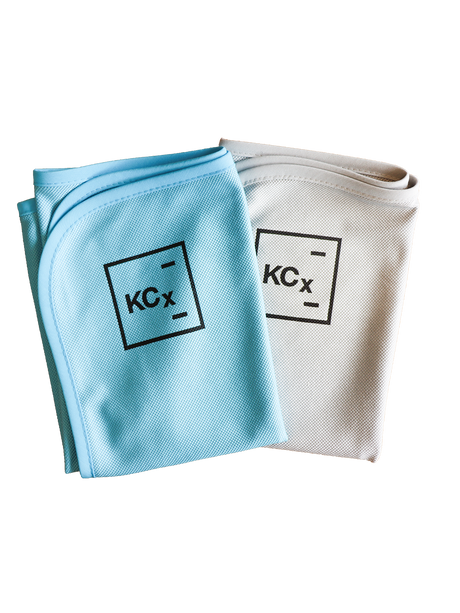
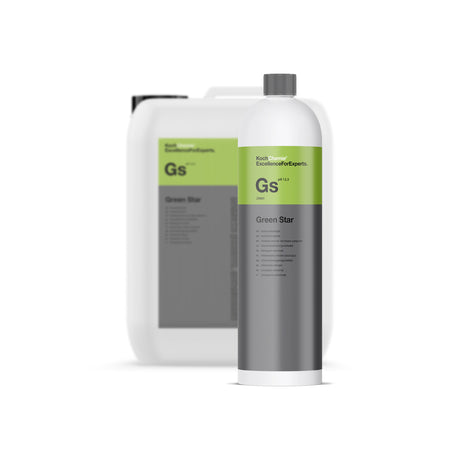
The glass cleaner comes first, because a clean windscreen holds less sand on the outside and mists up later on the inside. The Koch-Chemie Glas Star "Gla" Glass Cleaner Concentrate 1000 ml / 1 litre is an alcohol-based concentrate. You mix it 1:3 with distilled water in a spray bottle and, on the inside, spray it onto the cloth, not onto the glass. One customer writes in his review that dirt comes off the glass very easily with it. For wiping off, the Koch-Chemie Pro Glass Towel 230GSM Microfibre Glass Cloth Blue + Grey / 60x40 cm is the right match. It comes as a pair, and that's exactly how you use it: one cloth to clean, the second one dry for the final wipe.
For the ice itself we have the GYEON Q²M DeFrost De-Icer Spray 500 ml. The safety data sheet lists 70 to under 75 percent ethanol, enough to keep the mixture with the meltwater liquid even on a thicker layer. According to the manufacturer, it's suitable for coated and uncoated glass. Using it is simple: remove loose snow, spray on evenly, hit thick patches a second time, clear off what's left. There are two limits you should know. The spray doesn't belong in the washer fluid reservoir, and whatever runs over the windscreen surround onto the paint, you wipe off afterwards.
The Soft99 Ultra Glaco Glass Sealant is the groundwork for the rest of the winter. It goes on in a criss-cross pattern with the built-in felt applicator and, according to the manufacturer, lasts up to twelve months. Temperature matters: 15 to 25 degrees is ideal, below 10 degrees it cures unevenly, and afterwards it needs twelve hours without moisture. In November that means parking the car somewhere dry and warm for it. You'll find more options in the Window sealing category. We don't stock an ice scraper. Pick a plastic one with a clean, straight edge. The ADAC advises against metal scrapers.

Hot water and running wipers cost you more than time
The most expensive de-icing mistakes are hot water on cold glass, wipers switched on over ice and scraping a dirty, dry windscreen. All three seem to save a minute and hit exactly the parts you need to see.
On hot water, the ADAC, the Touring Club and HUK agree: the sudden change in temperature can cause stress cracks in the glass. A windscreen that already has a stone chip is especially at risk. Lukewarm water isn't the answer. It starts to thaw the ice and, according to the ADAC, freezes solid again straight away, leaving the layer of ice thicker than before.
The second classic is the wipers. Overnight the rubber lips freeze to the glass. Switch them on and, according to HUK, you risk tearing the rubber lip off, overloading the wiper motor or scratching the windscreen. The same goes for the windscreen washers on an iced-up windscreen: they don't help and can get damaged. Free them first, then switch on.
That leaves the makeshift fixes. A CD case, a loyalty card, a ceramic hob scraper or a metal scraper are no substitute for an ice scraper. The ADAC explicitly warns of scratched windscreens here. Vinegar and salt solutions work weakly and attack materials. And one question from our customer service: can glass cleaner concentrate go in the washer fluid reservoir? No. That's where a screenwash antifreeze belongs, which, according to the ADAC, you mix so that it protects down to about minus 20 degrees. Otherwise the washer jets freeze up.
Prevention starts the evening before with a clean windscreen
If you leave the windscreen clean and covered in the evening, you'll have less ice in the morning and, above all, no sand underneath to score the glass when you scrape. That costs two minutes in the evening and saves you the morning rush in which the mistakes happen.
The simplest step: after the last drive of the day, run the windscreen washers once. The ADAC recommends this so that no sharp-edged grit residue freezes onto the windscreen. A windscreen cover goes a step further. It sits between glass and wiper rubber, keeps the ice off the windscreen and stops the wiper blades freezing on. Old newspapers aren't a good idea for this; they freeze on themselves.
On glass sealant, we'll be honest. Carglass writes that ice sticks less firmly to the smooth surface. We haven't found an independent winter test on it. In practical trials at minus 6 degrees the ice came off sealed glass more easily; in freezing rain and minus 10 degrees the advantage was gone. So see it as a bonus, not a replacement for de-icing. Its main benefit is still visibility in the rain. And one more question that reaches us quite often: paint wax doesn't belong on the windscreen, that's what glass sealant is for. How to get it on properly is covered in our post on how to apply a windscreen sealant.
That leaves the inside. If the windscreen turns milky when you start up, moisture from the cabin is condensing on the cold glass. Air at 20 degrees can hold around 17 grams of water per cubic metre; at zero degrees it's only about 5 grams. In frost, this misting freezes into ice on the inside. According to TÜV NORD, properly cleaned glass mists up much less often than glass with a film of nicotine and plastic outgassing. The air conditioning only dehumidifies from an outside temperature of about 4 to 6 degrees. In frost, warm fresh air on the windscreen helps, with recirculation switched off. The causes are explained in detail in the post on your car fogging up on the inside, and matching cleaners are in the Glass cleaner category.

Daniel's tip from practice: In frost I always spray the driver's side and the strip along the wipers first, and only then brush the roof and side windows clear. By the time I've been once round the car, the ice on the windscreen has loosened and almost slides off by itself. Before the first pass I give the ice scraper a quick wipe on my glove. It collects sand in the door pocket, and that's exactly what otherwise ends up between edge and glass first.
No time for the whole post? Get it summarized:
Add Detailing1 as a preferred source on Google