

How often can you polish a car? Your clear coat has eight microns
Daniel von Detailing1 |


Koch-Chemie
Glass Cleaner "Gc" Glass Cleaner
Crystal clear, streak-free windows


Koch-Chemie × THE FINISHER
THE FINISHER "ClearView" Glass Cleaner
Streak-Free Glass Cleaner for Perfect Visibility and Shine
Soft99
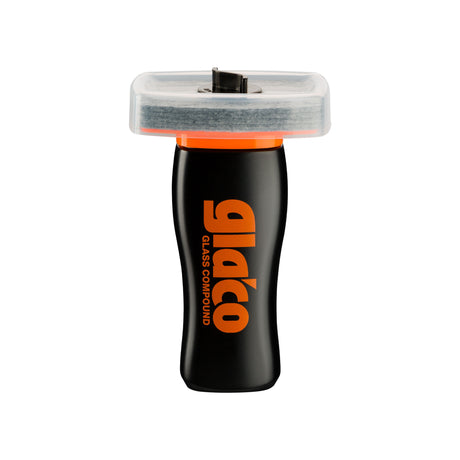
Glaco Glass Compound Roll On Glass Cleaner
Dual-Compound Glass Cleaner — Preparation for Sealants


SONAX
PROFILINE Glass Detailer Concentrate Glass Cleaner Concentrate
Glass Detailer Concentrate — Ammonia-Free Glass Cleaner Concentrate

SONAX
XTREME ScheibenKlar Glass Cleaner
ScheibenKlar — Streak-Free Glass Cleaner for Car Windows


TUGA Chemie
Tugalin® "Glas-Teufel" Glass Cleaner
Streak-free glass cleaner with lotus effect for car and household


GYEON
Q²M Glass+ (Plus) Glass Cleaner with Sealant
Glass cleaner with sealant – cleans and protects in one step
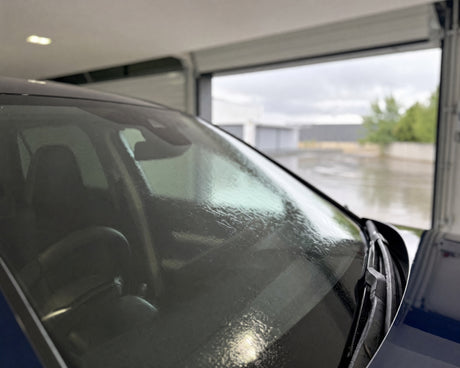
Glass sealant makes water bead off.


Meguiars
Ultimate Glass Cleaner with Water-Repellent Sealant
Streak-free cleaning & hydrophobic protective layer in one step
What makes a car glass cleaner? Inside, it lifts the oily outgassing film off the dash and rubber seals; outside, it takes on bug splatter, silicone and water spots. At Detailing1 you'll find concentrates for the big session, ready-to-use sprays, and cleaners that leave a sealant behind in the same pass.
Car glass cleaners are alcohol- and surfactant-based cleaners that pull two completely different kinds of dirt off the same pane. Inside sits a wafer-thin film of plasticisers that plastic trim gives off in the heat and that settles on the cooler glass. Outside you get insect protein, road film, silicone residue from car washes and limescale from tap water. Both need a solvent that flashes off with no residue, and neither forgives a wipe-down with just one cloth.
Detailing1's tip from the shop: We get the question a lot — why are there still streaks in the windscreen after cleaning? Nearly always it's because inside and outside were wiped in the same direction. So work crosswise: horizontal passes inside, vertical outside. Then if a streak is left, its direction tells you straight away which side it's on, and you're not cleaning the wrong side three times over. It costs zero extra seconds and it's the single most effective move in the whole category.
A window pane stands vertical, gets dirty from one side and is easy to reach from both. With car glass, none of those three hold true.
The windscreen lies almost flat. That rake catches everything coming from above, and it stretches the reach for your cloth: you're working across the dash on a surface you can barely see and can only pull off at a shallow angle. That's exactly the zone where most streaks get left behind.
Then there's the heat. A closed car in summer sun climbs well past sixty degrees inside, and the glass itself gets hotter still. Cleaner sprayed on there dries in seconds instead of lifting the dirt. That's why the same bottle works clean in the shade and leaves edges in direct sun.
The build-up is different too. The windscreen is laminated glass with a plastic film between two layers of glass; the side windows are toughened single-pane safety glass. In the rear window the heating wires sit on the inside face of the glass, and many cars carry a tint film there on top.
From that comes the most important limit in this category: ammonia has no business on car glass. The classic household cleaner contains it because it cuts grease fast, and that same substance attacks films, turns them milky and works its way along the conductor tracks of the rear-window heater. On the window at home you never notice; on the rear screen it stays visible.
The last difference is the edge zone. Right where the glass meets the seal, dirt collects that you'll never catch with the side window up. Drop it down a touch while you clean and take the top edge with you. Otherwise you'll see that dark stripe next time you lower it — the bit that was tucked in the door.
The coating inside doesn't come from outside. It comes from the car itself, and it forms fresh on every summer's day.
The culprits are plasticisers — additives that keep the hard plastics in the dash, door cards and seals supple. In the heat they slowly work loose from the material and hang as an invisible vapour in the cabin. The glass is the coolest point inside, so anything that can condense settles there.
The result is a wafer-thin, oily film. It doesn't bother you in daylight from the front and it reliably dazzles you in low sun and against oncoming traffic at night, because it scatters the incoming light instead of letting it through. Which means: the safety gain from clean inside glass is bigger than the cosmetic one.
New cars are hit harder than old ones, because fresh plastics give off more. For the first two years the inside glass is worth doing on a four-week rhythm; after that, less often does the job. If someone smokes in the car, a tougher, yellowish nicotine layer comes on top that needs several passes.
For the inside you always spray onto the cloth, not onto the glass. Otherwise the spray mist lands on piano-black trim, displays and leather stitching — and that's the last place you want an alcohol-based product. The Koch-Chemie Glass Cleaner „Gc" Glasreiniger is our most common pick for this round.
A side effect that counts in winter: grease-free inside glass fogs up more slowly and clears again faster. Moisture finds fewer places to grab onto bare glass than on an oily film, so it spreads as a barely visible haze rather than a solid mist. Translated: the demister needs less time in the morning before you've got a clear view again.
A link many people miss: silicone-based cockpit dressings make the problem worse, because they outgas themselves and settle on the glass. If your inside glass keeps going hazy within a few days, the cause is usually the plastic next to it. Matte, silicone-free care from the interior cleaners range fixes it at the root.
The outside carries a completely different mix, and it takes more mechanical punishment while being fussier chemically.
Bug splatter is the obvious part. Their protein cooks onto the sun-warm glass and bonds harder the longer it sits. After a July night drive the remains come off in a minute of dwell time; after two weeks in the sun you need a damp compress and several goes.
The less obvious part is silicone. Drying aids and wax programmes at car washes lay a thin silicone film over the whole car, and on the glass it turns, in the wet, into the smear your wiper just pushes back and forth. Anyone who knows the judder and skip of wiper blades usually knows this film.
Then there's limescale. Lime from tap water, from car-park sprinklers or from the last rain shower dries on as a mineral ring. Pure alcohol cleaners don't touch it, because lime isn't grease. There, only a mildly acidic product helps, or a second pass with pressure from the cloth.
The TUGA Chemie Tugalin® „Glas-Teufel" Glasreiniger is our go-to for this outside mix, because it stays strong enough for baked-on bugs and still pulls off with no residue. If you want a shorter bottle for the road, grab the SONAX XTREME ScheibenKlar Glasreiniger.
One note on order: the glass comes after the car wash, not before. Otherwise you wipe the road film off the roof and bonnet straight back onto the freshly cleaned windscreen. And if you want to cut the effort for good, follow the clean-up with a glass sealant, so water and dirt don't get a grip in the first place.
The range sorts by container format and added benefit, not by cleaning power. Every type dissolves the same dirt; they differ in how they get there.
Concentrates are the cheapest and most flexible group. The Koch-Chemie Glas Star „Gla" Glasreinigerkonzentrat is our best-seller in this category and gets mixed to the maker's dilution. You set the strength yourself: weaker for the quick inside round, stronger for bugs and water spots outside.
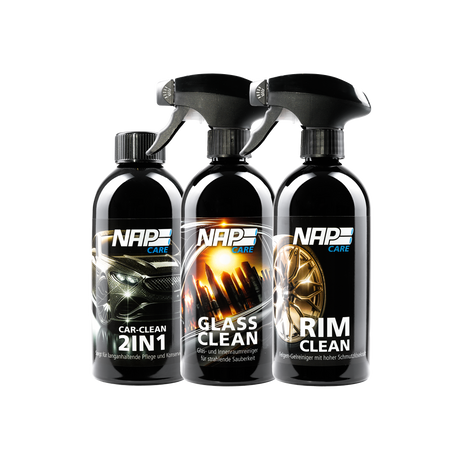
Ready-to-use sprays are the pragmatic standard. The Koch-Chemie Glass Cleaner „Gc" Glasreiniger, the NAP Care „GLASS-CLEAN" Glasreiniger and the GYEON Q²M Glass Glasreiniger stand for this group. Cap off, damp the cloth, done — no mixing jug and no maths.
The third group leaves a thin layer of protection. The SONAX XTREME Ceramic ScheibenKlar „2 in 1" Glasreiniger mit Versiegelung and the Meguiars Ultimate Glass Cleaner Glasreiniger mit Versiegelung clean and seal in one pass. The effect holds a few weeks and already gets you noticeable beading in the rain.
Honestly placed: if you really want water to bead until the wiper turns optional in town, you're better off with a dedicated sealant. The combo products are the convenience route for anyone who wants one bottle in the boot instead of two, and they're the easiest way to top the protection back up between details.
One detail that gets lost on the shelf decides it in the hand: the spray head. A fine, wide mist wets the surface evenly and needs little product; a coarse jet fires droplets onto the glass that run down and draw lines before you even get the cloth on. Good concentrates solve that neatly, because you keep the atomiser of your choice and only refill the fluid.
Then there are the specialists at the edge. The Koch-Chemie × THE FINISHER „ClearView" Glasreiniger aims at the final check before handover; the Koch-Chemie × THE FINISHER „SeaYou" Glasreiniger at salt-water build-up on boat and motorhome. The Meguiars PERFECT CLARITY Glass Cleaner Glasreiniger holds the ready-to-use middle.
The most important line in this category isn't on any label: a good glass cleaner doesn't stop a streak, it only makes one less likely. Technique decides.
Work with two cloths. The first is lightly damp and picks up the dissolved film; the second is dry and pulls off the leftover moisture before it evaporates on its own. A streak is nothing but dried-on cleaner with the loosened dirt in it. Where nothing is left standing, nothing can dry on.
The cloth choice matters more here than the brand on the bottle. For glass, smooth, short-pile microfibre or waffle-weave works, because it takes up moisture and barely sheds fibres. A high-pile drying towel for paint is the wrong call on glass. You'll find the right qualities under microfibre cloths.
The wash of these cloths matters. Fabric softener lays a film on the fibre that walks straight onto the glass next time out, and glass cloths belong washed separately from paint and interior cloths. A glass cloth that's once seen wax or cockpit dressing stays a streak-maker.
Then the passes: horizontal inside, vertical outside. This cross rule sounds like fussiness and saves you time every clean, because you can read from the direction of the leftover streak which side still needs doing. To finish, wipe the wiper blades down with the same solution, because a dirty blade spreads its film back over the fresh glass at the first rain.
And the conditions: cool glass, shade, better two light passes than one with a load of product. Spray too heavily and you're working against yourself, because the excess cleaner runs into the seals and comes back out later as an edge. The first time round you'll need about twenty minutes for all the glass; after a few goes it's ten.
The decision hangs on three questions: how often do you clean, what does your glass carry, and do you want to build protection in the same pass.
If you clean regularly or look after several cars, the concentrate is the clear answer. The Koch-Chemie Glas Star „Gla" Glasreinigerkonzentrat sits at the top of our sales for good reason: one bottle makes a lot of spray bottles, and you set the strength to match the job.
If you want one bottle in the car and no thinking about it, take a ready-to-use spray. The Koch-Chemie Glass Cleaner „Gc" Glasreiniger is the obvious pick, the NAP Care „GLASS-CLEAN" Glasreiniger the budget-minded way into the same routine.
If your car carries tint film or a heated rear window, stay strictly with ammonia-free products. Every cleaner in this category meets that; on the household shelf that doesn't hold. The GYEON Q²M Glass Glasreiniger is also tuned for coated glass and won't attack an existing sealant.
If you do a lot of motorway and night driving, take the beading along right away. The SONAX XTREME Ceramic ScheibenKlar „2 in 1" Glasreiniger mit Versiegelung covers both. For full durability across a whole season the dedicated glass sealant stays the stronger route, and the two don't rule each other out.
And if you're after the bigger picture: cleaning, sealing, de-icing and wiper care all sit together under windows and glass. The glass is the one surface on the car you look at on every drive. That justifies the extra ten minutes more than any other care job.
Too much choice in Glass cleaner? Get help picking:
Daniel von Detailing1 |

Daniel von Detailing1 |

Daniel von Detailing1 |

Daniel von Detailing1 |

Daniel von Detailing1 |

Daniel von Detailing1 |

Daniel von Detailing1 |

Daniel von Detailing1 |

Daniel von Detailing1 |

Jasper von Detailing1 |

Daniel von Detailing1 |

Jasper von Detailing1 |