

5 Mistakes That Break Down Your Rain Repellent in Winter
Daniel von Detailing1 |


YETI
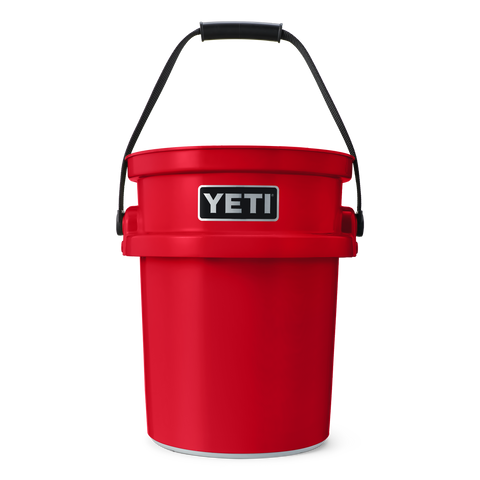
LoadOut® Bucket / 19 Litre Bucket
Extremely robust 19 litre bucket, ideal for car care.


YETI
LoadOut® GoBox 60 Gear Case (large)
Ultimate storage solution for car care hardware


YETI
LoadOut® GoBox 30 2.0 Gear Case with Carry Strap
Robust and versatile equipment box for optimal organization


YETI
YETI LoadOut® GoBox 15 Gear Case (small)
Robust, versatile storage solution for adventure


YETI
Bucket Swivel Seat / lid seat for the "LoadOut® Bucket"
Versatile Seat Lid with 360-Degree Rotation for Easy Car Care


YETI
Bucket Caddy / insert for the "LoadOut® bucket"
Organize your car care with the robust insert
YETI
"Thin Ice" IcePack Cooler Pack (Flat)
Space-saving flat ice pack for optimal cooling


YETI
Bucket Lid / Lid for the "LoadOut® Bucket"
Practical, robust and weatherproof lid for your YETI bucket


YETI
Bucket Utility Gear Belt / belt pouch for the "LoadOut® Bucket"
Perfect organization for your wash bucket
YETI
Compact and robust ice pack for lasting cold


YETI
Rambler® "Lowball" Insulated tumbler with Magslider™ lid (stackable)
Robust Insulated Mug for Hot and Cold Drinks


YETI
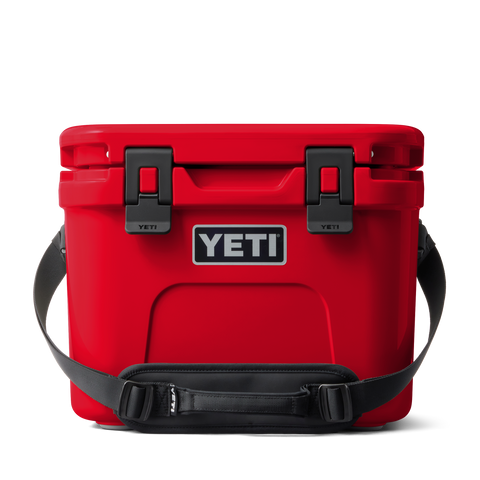
Roadie® 15 Hard Cooler cool box with shoulder strap (small)
Compact and robust cool box with excellent insulation
What is YETI? A gear brand from Austin, Texas that builds coolers, transport cases and insulated tumblers. The body is rotomoulded as a single piece with no seam. At Detailing1, YETI sits alongside car care as an add-on, not as a detailing product.
YETI is a maker of coolers, transport cases and drinkware from Austin, Texas, founded in 2006 by brothers Roy and Ryan Seiders. The hard coolers are rotomoulded, a process where plastic powder melts inside a rotating mould and forms a seamless hollow body. Polyurethane foam is then injected into that body under pressure. Select models carry a bear-proof certification.
Day-to-day from Detailing1: The most common mistake happens before the first ice ever goes in. A cooler that spent the morning in a warm car has brought several kilos of plastic up to room temperature, and that heat eats through your first load of ice before it ever reaches the drinks. Pre-chill the cooler the evening before, with a sacrificial load of ice or simply overnight somewhere cold. Then fill it right up, because air is the worst thing you can put in it. And leave the meltwater in rather than draining it: cold water holds the leftover chill far better than the empty air space you'd get otherwise.
YETI came out of 2006 from a frustration anyone who hauls gear in a car knows: the lid gives way, the hinge snaps, the latch tears out.
Roy and Ryan Seiders were anglers and hunters, not product developers. The coolers they found in the shops were thin-walled, injection-moulded tubs meant to be treated as disposables. Stand on one to see over the reeds, and a moment later you're standing in the lid.
Their call wasn't to make it cheaper, but tougher. The price was the consequence of that call, not its starting point. It's a difference you can still feel in the brand today: YETI has no entry-level line that waters the standard down, and no budget version of the insulation.
The brand grew through the hunting and fishing scene, then through overlanding, building sites and motorsport. Gear doesn't get babied in any of those places, it gets used, and kit that survives a season gets talked about fast in circles like that.
By now YETI is also a lifestyle brand, its tumblers sitting in kitchens that have never seen a river. That's an honest observation, not a dig. We still treat the products as what they are on the technical side: pieces of kit with a design you can follow.
That's exactly why YETI is in the Detailing1 range. If you take your car seriously, you usually take the gear riding along in it seriously too. The brand asks for no more than that, and it sells for no less.
Rotomoulding is the process everything else hangs on. It decides wall thickness, insulation and lifespan all at once.
The sequence is surprisingly simple. Plastic powder goes into a closed hollow mould, the mould travels into the oven and spins on two axes at the same time. The powder melts and settles evenly across every inner surface, like batter swirled around a baking tin. Out comes a one-piece hollow body, with no joint, no weld seam, no bolted half-shells. For you that means the corners where a cooler knocks about in the boot for years are just as thick as the faces in between.
Polyurethane is then foamed into the wall of that hollow body under pressure. The liquid foam fills the gap completely and cures into a web of millions of tiny, closed gas cells. Each of those cells is a dead end for heat, because trapped air barely passes energy on. You notice it like this: the top of the lid stays cool to the touch while there's still ice inside.
The gasket, the hinge and the latch are the three spots where coolers normally age. YETI runs a gasket lip all the way around the lid, a continuous hinge band instead of separate plastic lugs, and rubber T-latches that keep pulling the lid down into the seal. None of it is flashy. Together, those three details explain the price gap better than any insulation figure.
The bear-proof certification is the toughness proof for that whole package. In the Interagency Grizzly Bear Committee test, a full-grown grizzly works at the locked cooler for sixty minutes, and afterwards it can't have a single hole or a lid that popped open. We get questions about this all the time: no, you don't need it in Germany. Yes, it's the most telling stress test a cooler can put on a spec sheet.
The flip side comes with it. Thick walls and foamed-in insulation weigh something, and a big hard cooler is no lightweight even when it's empty. If you'll be lugging it across a field on your own on a regular basis, grab the smaller model or a version on wheels.
The range falls into three clearly separated families, plus the accessories that turn the boxes into a system in the first place.
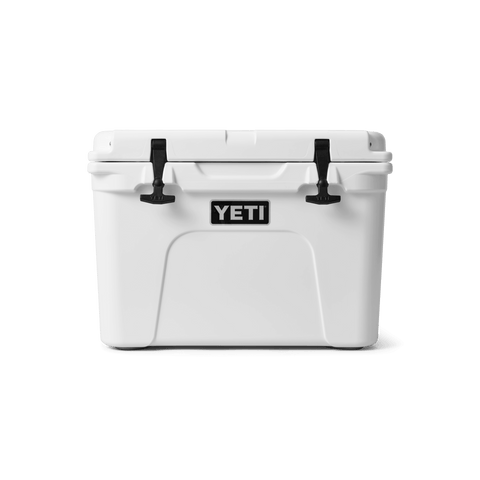
The hard coolers of the Tundra series are the core of the brand. The number in the name stands for the rough capacity in quarts, which is why the models run from a handy box for two people up to the size you carry between two of you or pull on wheels. They're the pick when the cold has to hold for several days.
The Roadie series solves the same problem for shorter trips. These boxes are built narrower and taller, so bottles stand upright instead of lying down, and you can carry them one-handed. For a day at the lake, the drive to a meet or the boot of an estate with limited load height, that's the better shape.
The LoadOut family doesn't cool at all, it hauls. The Gear Cases run from the YETI LoadOut® GoBox 1 Gear Case (Mini) through the YETI LoadOut® GoBox 15 Gear Case (small) and the YETI LoadOut® GoBox 30 2.0 Gear Case with shoulder strap up to the YETI LoadOut® GoBox 60 Gear Case (large). Every size stands steady on level ground, stacks, and has a lid that borrows the gasket from the cooler principle.
The YETI LoadOut® Bucket / 19-litre bucket is the cheapest way into the brand and, at the same time, the most honest product in it: a bucket with a reinforced base and handle. It's the accessories that make it versatile. The YETI Bucket Lid / lid for the LoadOut® Bucket seals it, the YETI Bucket Swivel Seat / swivel seat lid for the LoadOut® Bucket turns it into a spinning stool, and the YETI Bucket Utility Gear Belt / tool belt for the LoadOut® Bucket hangs small bits on the outside rim. For the boxes there's the same logic in the shape of the YETI GoBox Divider / divider for the LoadOut® GoBox.
That leaves the drinkware and the ice packs. The YETI Rambler® Lowball insulated tumbler with Magslider™ lid (stackable) uses double-walled stainless steel with a vacuum in between, so there's no plastic anywhere in the cold path. The YETI "Ice" IcePack ice pack and the flat YETI "Thin Ice" IcePack ice pack (flat) replace loose ice without everything ending up swimming in meltwater.
The practical value of these products shows up less at the lake than in the boot, where gear otherwise slides around loose.
A Gear Case takes in what usually rattles around in carrier bags: spray bottles, microfibre cloths, polishing pads, gloves. The lid closes against a gasket, which means a leaky canister cap keeps its contents in the box instead of in the carpet. From the Detailing1 day-to-day: this exact point is the most common reason someone asks about a box like this, and it's almost never the trip to the water.
Plenty of people use the LoadOut Bucket as a transport container for chemicals and press it into service as a seat on the go. An honest bit of context: it isn't meant to be a classic wash bucket in the two-bucket method, because a grit guard was never part of the concept, and the wall thickness eats into the inner dimensions. If you want to wash properly, grab the right wash bucket and use the LoadOut for everything that comes after.
With the hard coolers, the prep decides the outcome. Pre-chilled, filled to the brim and with the drain shut, a Tundra holds ice for several days. Half-filled, packed warm and opened every twenty minutes, you're down to hours. The box works no miracles, it slows heat down, and how much it does that is on you.
An insulated tumbler sounds like the most trivial category, and in winter it isn't. Push through a hand wash at five degrees and your fingers are cold after forty minutes, and a coffee that's still hot after the polish stretches your motivation in a way you can measure. That's not a technical argument, it's a practical one.
On care: warm water and a mild cleaner are enough for the body and lid. Solvent-based products have no business near the gasket, and the box should be left open to dry before it's closed. Seal a cooler up while it's still damp and after two weeks it smells exactly the way you'd expect it to after two weeks. You'll find more gear for around the car under Lifestyle.
YETI isn't car care. This collection sits with us as an add-on, and that belongs at the start of any honest assessment.
Rotomoulded coolers now come from several makers, some of them a good bit cheaper. The body is similar across all of them, because the process is the same. The differences sit in the quality of the gasket, in how well the lid fits the body, in the latches, and in whether there are still spare parts five years down the line. Those are the spots where the premium is decided, and nobody sees them on the shelf.
A cooler doesn't make cold, either. It holds back the cold you put into it. If you've got power in the car and need food kept frozen for over a week, you buy a compressor fridge, not an insulated box, whatever the brand. That's a different use case with different physics.
Just as clear: for the barbecue spot round the corner, where the drinks are gone after four hours anyway, a bear-proof box is a very expensive answer to a small question. We'd rather say that up front than process a return afterwards.
And then there's the part the brand itself barely mentions: the resale value of used hard coolers stays remarkably high. Realise after three years that the size doesn't suit you, and you lose far less than you would on a plastic box from the DIY store. That puts the purchase in perspective without sugar-coating it.
That leaves the point the scene doesn't like to talk about. A share of buyers are buying the name, and the brand knows it. We still judge the products on their build, because that's the one measure that still holds even when the brand has fallen out of fashion.
The decision comes down to one single question: does the gear ride along all the time, or does it come out of the cellar twice a year?
For getting started without a big budget, the YETI LoadOut® Bucket / 19-litre bucket is the most honest way into the brand. On an everyday object you can see what the material thickness does, and you can build it out later with a lid, a seat lid or a tool belt in whatever direction you actually need.
If you're hauling gear, you sort by volume, not by price. The YETI LoadOut® GoBox 15 Gear Case (small) holds the basics for a hand wash, the YETI LoadOut® GoBox 30 2.0 Gear Case with shoulder strap is the size we get asked about most often, and the YETI LoadOut® GoBox 60 Gear Case (large) swallows a full polishing kit, machine included.
With cooling, the duration decides. For a single day, a box from the Roadie series is plenty, because it's lighter and goes into the car one-handed. For a weekend or several days with no resupply, the road leads to the Tundra series with its thicker wall and bigger volume.
On what you're cooling with: loose ice chills fastest but leaves water behind. The YETI "Ice" IcePack ice pack keeps the inside of the box dry, and the flat YETI "Thin Ice" IcePack ice pack (flat) lies on top of the contents, where cold belongs, because it sinks. In practice, the combination of the two is the most reliable solution.
And if you're still on the fence, it helps to look at what happens without the right box. A canister cap that works loose on the drive spreads concentrate through the boot carpet, and that stain costs you an afternoon of upholstery cleaning and, usually, a bit that never fully goes. A sealed box costs money once. The carpet costs time every time.
Too much choice in YETI®? Get help picking:

Daniel von Detailing1 |

Daniel von Detailing1 |

Daniel von Detailing1 |

Daniel von Detailing1 |

Daniel von Detailing1 |

Daniel von Detailing1 |

Jasper von Detailing1 |

Daniel von Detailing1 |

Daniel von Detailing1 |

Daniel von Detailing1 |

Jasper von Detailing1 |

Jasper von Detailing1 |