5 reasons your windscreen smears after summer
Daniel von Detailing1 |




THE COLLECTION
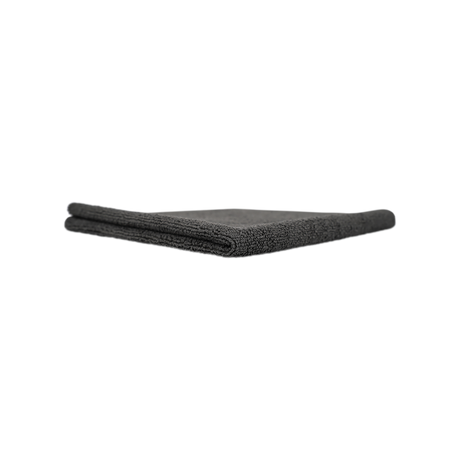
"Allround / Coating 245" short-pile edgeless microfibre cloth (245 GSM)
Short-pile edgeless microfiber cloth for precise removal


The Rag Company
Car Wash 320GSM Microfibre Cloth
Fulfill your vehicle care with premium microfiber technology


THE COLLECTION
"Allround / Coating 300" short-pile edgeless microfibre cloth (300 GSM)
Low-pile 300 GSM microfiber cloth with extra substance


THE COLLECTION
"Allround 365" short-pile edgeless microfibre cloth (365 GSM)
Short-pile Edgeless Microfiber Towel with more volume


Koch-Chemie
Pro Allrounder Towel "315GSM" Microfibre Polishing Cloth
Premium Microfiber Polishing Cloth for Car Care


D-CON
Happy End Edgeless 450GSM Microfibre Cloth
Fluffy microfiber cloth for streak-free, gentle car care


THE COLLECTION
"Dual Pile" long- and short-pile microfibre towel (420 GSM)
Double-sided microfiber towel for a precise finish


Koch-Chemie
Polish and Sealing Towel 520GSM Microfibre Cloth


Koch-Chemie
Coating Towel 300GSM Microfibre for Ceramic Coatings


The Rag Company
Eagle Edgeless 500GSM Microfibre Cloth
Ultimate 500GSM for perfect results without scratches.

Koch-Chemie
Fine Fiber Towel synthetic-leather drying cloth


Dr. Wack "A1"
A1 "DAS TUCH" Premium Microfibre Cloth
High pile on both sides for buffing off, cut seamless
Which microfibre cloth does your car need? That comes down to the weight in GSM and the edge. Light towels around 250 GSM take off polish and sealant residue, heavy ones from 900 GSM dry, and a cut edgeless border keeps the paint scratch-free while you do it.
Microfiber cloths for your car are woven from split polyester and polyamide fibres that are thinner than a human hair. Splitting creates wedge-shaped fibre ends that pick up dirt and lock it into the weave instead of pushing it across the paint. The weight in grams per square metre, GSM for short, decides whether a towel is for removing residue, buffing or carrying water.
Detailing1's tip from the shop: We regularly get questions about towels that, after a few months, just push water around instead of soaking it up. In almost every case fabric softener was involved, often indirectly through leftovers in the drum or through dryer sheets. Softener is made to coat fibres, and a coated microfibre has no open capillaries left. Wash your towels with a liquid detergent without softener or bleach, and leave the softener compartment empty. Treat heavy residue as the detergent instructions say, for example with the recommended soak, rather than simply washing hotter.
GSM stands for grams per square metre and describes how much fibre mass sits on a towel's surface. More mass means a deeper pile and more capacity.
Picture two towels of the same size side by side, one at 250 grams per square metre, the other at 950. The heavy one has a dense, deep pile and behaves like a terry bath towel, the light one more like a fine tea towel. In everyday use, the heavy one carries water, the light one works precisely at the surface.
What GSM doesn't tell you is quality. A coarsely woven 500 GSM towel can run harder over clear coat than a finely knitted 300. The weight describes the amount of fibre, not how fine it is, not the weave and not how the edge is finished.
The second number usually sits right beside it: the blend ratio. Eighty parts polyester provide structure and cleaning power, twenty parts polyamide bring softness and absorbency. A seventy-thirty blend feels noticeably softer and holds more, but it costs more to make.
What ultimately counts is whether the fibre has been split. Unsplit microfibre pushes dirt ahead of it, split fibre opens up into wedge-shaped ends and traps particles in its capillaries. The test costs nothing: a split towel catches slightly on dry skin, an unsplit one glides over it.
From everyday life at Detailing1: most bad buys happen because people only look at the gram number. Grab a heavy drying towel for polish residue and you're fighting a pile that swallows the residue instead of lifting it, and then you wonder about the smears under raking light.
Three weight classes cover every job on the car. Light up to around 300 GSM, medium between 300 and 600, heavy from 600 upwards.
The light class between 200 and 300 GSM has a short pile and little bulk. It pulls off sealant residue, polish haze and quick detailer film without soaking up much product itself. The Koch-Chemie Pro Glass Towel 230GSM Microfibre Glass Cloth works streak-free on glass because it barely sheds any lint.
In the same class sits one of the best-selling work towels in our range, the THE COLLECTION „Allround / Coating 245" kurzflorige Edgeless Mikrofasertuch (245 GSM). It's deliberately thin so a freshly applied ceramic layer gets levelled evenly and no high spots are left behind.
The medium class between 300 and 600 GSM is the all-rounder for interiors, plastics, polish removal and the quick detailer round. The Koch-Chemie Pro Allrounder Towel „315GSM" Microfibre Polishing Cloth and the THE COLLECTION „Allround / Coating 300" kurzflorige Edgeless Mikrofasertuch (300 GSM) cover this range.
As the pile gets longer, there's more reserve for product residue. The Koch-Chemie Polish and Sealing Towel 520GSM Microfibre Cloth and the SONAX PROFILINE MicrofaserTuch „Soft Touch" Microfibre Cloth pick up spent polish without dragging it across the panel.
From 600 GSM the drying class begins. Microfibre holds roughly seven times its own weight in water, so a Koch-Chemie Pro Drying Towel 950GSM Microfibre Drying Towel handles half a car before it needs wringing out. The THE COLLECTION „Aqua" Twisted Loop Drying Towel (1500 GSM) takes it a step further with twisted fibre loops.
It isn't the face of a towel that puts fine scratches in the clear coat, it's the border. That's exactly where many cheap towels carry their hardest material.
An overlocked edge is wrapped in polyester thread. That thread is smooth and hard, much stiffer than the soft microfibre next to it, and when you wipe it runs over the surface as a narrow ridge. Tell-tale sign: the typical fine arcs you see under raking light often end exactly at towel width.
Edgeless towels don't have that ridge. They're cut by ultrasound or laser, which seals the cut edge at the same moment. What's left is an edge made of the same soft material as the face; it doesn't fray and carries no foreign thread. For painted surfaces, that's the safe design.
Between the two sits the bound satin edge, often called silk banded. A soft, smooth band closes off the border, which keeps the towel in shape better than a plain cut edge. On glass and interiors that's a good solution; on freshly polished black paint, edgeless is still the finer choice.
Sewn-in labels belong in the same risk category. A stiff label in the corner is, if anything, harder than any seam and ends up under your hand as you wipe. We always cut labels off flush before a towel touches paint for the first time.
Sewn edges still have their place, wherever toughness counts. Door sills, wheel arches, the engine bay surround, tools and wheels handle the sturdier seam fine, and those towels survive rough work longer. The rule is simple: sewn edge for everything except paint and glass.
A microfibre towel is a storage tank. Whatever it's picked up stays in it until the next wash, and that's exactly why you keep the jobs separate.
Colours are the easiest way to do it. We recommend a fixed colour code, because it works in your routine without having to think: one colour for paint and sealant, one for glass, one for interiors, one for wheels and sills. Which colour goes where is up to you, sticking to it is the point.
Glass deserves its own colour, because every trace of product shows up there straight away. A towel that has seen plastic dressing before will leave smears on the glass that no Glass cleaner can shift. Short-pile, lightweight material and a towel that has never touched anything else settle the issue for good.
The same goes, to a lesser degree, for the round with the Quick Detailer. Here you're working on dry paint with minimal lubrication, so the softest, cleanest towel from the stack belongs on it. Two towels at once is the standard: one to pick up, one to buff.
And the limits: a microfibre towel doesn't replace chemistry. Baked-on bugs, tar and iron fallout don't come off with more pressure, but with the right product and dwell time. Wipe dry over dirty paint and you're using the towel as sandpaper, and a towel that's been dropped on the floor never goes back on the paint.
Splitting up the jobs goes beyond the towel. For washing you want Washing gloves with a long pile that pulls dirt away from the paint down into the fibres, for drying a large Drying towels option. The full overview of every type is under Cloths & microfibre.
Microfibre is plastic, and plastic forgives heat and additives less than cotton does. Three rules keep the stack in shape for years.
There's no single wash temperature for all microfibre towels. THE COLLECTION allows up to 60 degrees for its towels, SONAX states 40 degrees for Microfibre Wash and INNOVACAR a maximum of 30 degrees for SM Micron. Follow the towel label and the detergent instructions together: a higher temperature rating on the towel doesn't override a lower limit on the detergent.
Fabric softener stays out completely. It's built to coat every fibre in a slippery film, and exactly that film seals the capillaries microfibre uses to take up water and dirt. In practice: the towel feels fluffy and afterwards just pushes the water ahead of it. The same goes for dryer sheets in the tumble dryer.
Washing separately from cotton is the rule people skip most often. Cotton sheds fibres in every wash, and they lodge in the microfibre's pile. You only see the result on the glass, when a towel that's actually clean suddenly leaves lint behind. Bath towels, cleaning rags and jeans therefore go in a different load.
For lightly soiled towels, a simple liquid detergent without softener, bleach or optical brighteners can be enough. For wax, polish and sealant residue, go by the instructions of a suitable Microfibre detergent. Powder doesn't always fully dissolve in short programmes and settles as residue in the fabric. An extra rinse is worth it, because it flushes out exactly that residue.
To dry, lay the towels flat or hang them up in the air. Only use the tumble dryer if the towel label and detergent instructions allow it, and only at the approved temperature. Sort the towels by job as you collect them, and wheel and paint towels will never end up in the same drum.
For complete car care you don't need a big range of types, just three kinds in sufficient numbers.
The starter kit is one drying towel, a stack of all-rounders and two glass towels. For drying, grab the Koch-Chemie Pro Drying Towel 950GSM Microfibre Drying Towel or the THE COLLECTION „Aqua" Twisted Loop Drying Towel (1500 GSM), plus the Koch-Chemie Pro Glass Towel 230GSM Microfibre Glass Cloth for the windows.
As the workhorse of the stack, the THE COLLECTION „Allround / Coating 300" kurzflorige Edgeless Mikrofasertuch (300 GSM) has won out with us. If you want a bit more pile for polish and wax residue, go for the THE COLLECTION „Allround 365" kurzflorige Edgeless Mikrofasertuch (365 GSM).
If your car has a ceramic coating, add a towel that's used for levelling only. The Koch-Chemie Coating Towel 300GSM Microfibre for Ceramic Coatings and the THE COLLECTION „Allround / Coating 245" kurzflorige Edgeless Mikrofasertuch (245 GSM) have a short enough pile that nothing gets left behind.
If you regularly look after several cars, the maths changes. Then numbers beat specialisation, because a fresh towel per panel is quicker than any rescue mission on a clogged one. For the wash itself, the Koch-Chemie Exterior Wash Mitt 640GSM Microfibre Wash Mitt rounds out the kit, and for the drying round the SONAX PROFILINE MicrofaserTrockenTuch „PLUS" Microfibre Cloth.
One honest take to finish. On painted surfaces, the gap between a solid towel and a top-end one is smaller than the price range suggests. The biggest jump comes when you switch from a sewn to a cut edge and consistently keep towels separate by job. Everything else is fine-tuning, and you can dial that in at your own pace.
Too much choice in Microfiber cloths? Get help picking:
Daniel von Detailing1 |

Daniel von Detailing1 |

Daniel von Detailing1 |

Jasper von Detailing1 |

Daniel von Detailing1 |

Daniel von Detailing1 |

Daniel von Detailing1 |

Jasper von Detailing1 |

Jasper von Detailing1 |

Daniel von Detailing1 |

Daniel von Detailing1 |

Daniel von Detailing1 |