

Treat your door seals before the first frosty night freezes the door shut
Daniel von Detailing1 |


Which tyre dressing survives the next rain comes down to the formulation.

SONAX
XTREME ReifenGlanzGel "Ultra Wet Look" Tyre Care
Tyre gloss gel "Ultra Wet Look" – tyre dressing with a deep high gloss


SONAX
XTREME Ceramic Tyre+Wheel Detailer Quick-Detailer
2-in-1 Ceramic Care: Cleans, protects, and conditions tires and rims

Meguiars
GOLD CLASS Endurance Tire Gel — Tyre Care
Tire Care for a Perfect Finish


Soft99
Digloss Black Devil Tire Wax Tyre Care
Perfect tire care with intense shine and UV protection


INNOVACAR
"SC6" Wet Dressing Tyre Care (glossy)
Tire care with shine and a perfect wet look

On a sidewall still greasy, tyre dressing dries in patches.
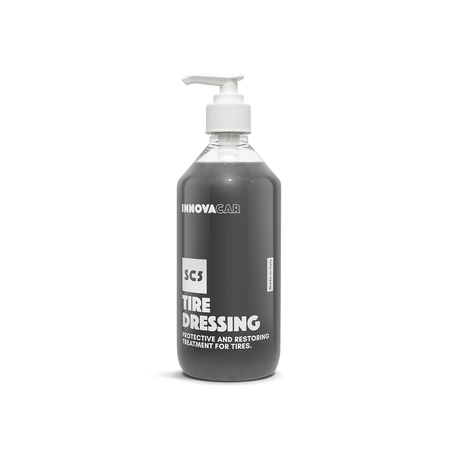
INNOVACAR
"SC5" Tire Dressing — Tyre Care
Versatile tire and plastic care with long-lasting protection


CarPro
"DarkSide" Tyre & Rubber Sealant — Tyre Care
High-quality, hydrophobic tire care with long-lasting durability
D-CON
D-CON Dark-Black-Tire-Gel Tyre Dressing
Tire care gel for shiny and protected tires


GYEON
GYEON Q²M TireExpress – Polymer Tire Dressing for Weeks of Black

GYEON
Q² Tire Ceramic Tire Protecant Tyre Care with Sealant
Ceramic tire care without speckles – long-lasting deep black

Meguiars
Ultimate Waterless "Wheel and Tire" Dry Wash Detailer
Waterless rim cleaning and tire care in one product


Soft99
Revitalize your tires with natural black tint.
What does tyre care actually do? It tops up the protective layer that shields rubber from UV and ozone, and gives the sidewall a clean, defined finish along the way. At Detailing1 you'll find water-based dressings for a satin look, silicone gels for wet shine, and ceramic tyre sealants that ride out several washes.
Tyre care means dressings, gels and sealants for the sidewall of a tyre. They top up the protective agents the maker blends into the rubber compound, the ones that get used up over the years: waxes against ozone cracking, carbon black against UV. You see that top-up as an evenly coloured sidewall with no grey haze. Depending on the binder, the finish runs from satin matte to wet-look gloss.
Detailing1's tip from the shop: We get a lot of questions about brown streaks that run down the sidewall two days after dressing and end up on the sill. That's not a bad product, that's excess. Silicone gels stay oily, and whatever doesn't soak into the rubber gets flung outward by centrifugal force in the first rain. Lay it on thin, let the coat flash off for ten minutes, then go over the whole sidewall once more with a dry applicator. What sticks to the foam would otherwise have ended up on your paint.
A tyre loses its elasticity not mainly from wear, but from two attacks out of the air: high-energy UV light and ozone.
The compound is natural and synthetic rubber, cross-linked with sulphur and filled with carbon black. The double bonds in the rubber chains are the weak point. They keep the material supple, and they're also exactly where the chemistry attacks from outside.
UV radiation carries enough energy to cut those chains. Photo-oxidation is the name for it: the fragments bond with oxygen, and the material turns harder and more brittle. You notice it when an old sidewall no longer gives under your thumb but feels dull and scratchy.
Ozone works more quietly. The molecule latches onto a double bond and splits it open. If the rubber is under tension at that spot, it tears there, always across the direction of pull. These ozone cracks run fine and parallel across the sidewall and are the classic find on a car that stands a lot. In plain terms: the tyre still has tread and is finished anyway, because the sidewall no longer pulls its weight.
The carbon black in the mix is the first line of defence. It's deep black because it swallows almost all the UV before it reaches the polymer chains. That's exactly why a tyre is the colour it is and not the colour of raw rubber. Put another way: here the colour is function, not design.
From what we see day-to-day: the oldest sidewalls rarely sit on the cars with the highest mileage. It's the second cars and seasonal cars that stand outside in the same spot nine months of the year. Movement and heat keep redistributing the protective agents through the material; standing still doesn't.
It comes back after every wash, and plenty of people read it as grime bleeding out of the tyre. It's actually the opposite.
Tyre makers blend protective waxes and anti-ozonants straight into the rubber. These agents are only partly soluble in the compound, so they migrate outward on their own. At the surface they gather into a thin film that catches the ozone before it reaches the double bonds in the material.
The trade calls this blooming. The film looks grey to brownish because the waxes oxidise in the air and bind dust. For you that means the discolouration is proof that the protection mechanism in the tyre is still working and still topping itself up. A tyre that stops blooming after a wash altogether has largely used up its wax reserve.
So two goals pull against each other. Visually you want the film gone, because it leaves the sidewall dull and blotchy. Technically it's a barrier you shouldn't strip without replacing it. The middle ground is to take it off and, in the same pass, lay down a care layer in its place.
Not every discolouration is blooming. A milky white right after the wash usually comes from a strongly alkaline cleaner that sat too long on the dry sidewall. A streaky shine that only sits in patches, on the other hand, is the leftover of an old silicone layer that wore off unevenly.
What we see at Detailing1 over and over: tyres get the same harsh all-purpose cleaner week after week as the wheel arch and door sill. The protective film then never gets time to rebuild. Stripping it properly two to four times a year and dressing afterwards is plenty; in between, shampoo does the job.
Every tyre dressing lays a layer on the sidewall, and the binder in it decides the look, the durability and how much it slings off.
Water-based dressings work with polymer emulsions. Once they've flashed off, a firm, dry film stays on the rubber that no longer migrates and so doesn't sling onto the paint. The finish is satin to silky, the look of a factory-fresh tyre rather than a wet one. That pays off for you above all the day after, when the sill stays clean.
Silicone products rely on polydimethylsiloxane, an oil with a backbone of silicon and oxygen. It stays mobile, lays a closed mirror over every texture of the sidewall and throws the light straight back. Hence the wet shine. In practice the effect is there instantly, and the excess needs wiping off.
The format decides how much control you get. A gel like the Meguiars GOLD CLASS Endurance Tire Gel goes exactly where you want it with the applicator. A foam like the Meguiars Ultimate Insane Shine Tire Foam spreads itself, and a spray like the Meguiars Ultimate Insane Shine Tire Spray is the quickest option for a touch-up between washes.
The most durable group is the ceramic tyre dressings. They lock silicon dioxide into the layer, so the film cures harder and rides out several washes instead of coming off with the first foam. The Meguiars Hybrid Ceramic Tire Shine and the Meguiars Ultimate Insane Shine Tire Coating belong here.
A bit off to the side sits the SONAX XTREME Ceramic Reifen+FelgenDetailer Quick-Detailer. It handles tyre and wheel in one go, which makes it more of a refresh after the wash than a base coat. For the wheel side of that job, it's worth a look at the wheel sealant range too.
A care layer only grips bare rubber. On top of the old bloom film it just sits there loose and is gone again after two washes.
The tyre comes before the paint, because brushing throws spray around. The SONAX XTREME Reifen+KunststoffReiniger tyre & plastic cleaner lifts wax film, brake dust and road grime in one pass and works on the black plastic trim around the wheel while it's at it.
The brush makes the difference. Spray on, let it dwell briefly, then work medium-stiff bristles into the texture of the sidewall. The foam turns brown as you go. When it stays white on the second pass, the film is off and the surface will take dressing. That's the only reliable test you have without a meter, and it costs you thirty seconds.
Then rinse and let it dry. On a wet sidewall any dressing thins out and dries blotchy. Ten minutes of air is enough on a warm day; if in doubt, run an old microfibre cloth over the sidewall first.
Apply with a foam applicator, not straight from the bottle. Otherwise the mist lands on paint, brake disc and wheel barrel. You'll find the right pads under applicators. Thin and even beats heavy, because a second coat is still on the table ten minutes later.
From the day-to-day at Detailing1: the first time, four tyres including cleaning take you around forty minutes. By the third time it's fifteen, because the order of spray, brush, rinse and apply has clicked. That jump is part of the deal and no sign of clumsiness.
The line for this category runs along the tyre shoulder. Anything that faces the road stays untreated, no exceptions.
Dressings work with oils and polymers that cut friction. On the contact patch between rubber and tarmac, that friction is exactly what brakes you and holds you in a corner. A film there lengthens your stopping distance, especially in the wet and in the first few miles. The tyre looks completely normal while it does, and that's what makes this mistake so nasty.
The sidewall ends at the edge where the tread shoulder begins. Work up to there and no further. If something does land on the tread while you spray, wipe it off with a damp cloth before it dries in.
What we flatly won't promise from this category: ozone cracks that are already visible don't come back. No dressing closes a crack in the rubber; if anything it just darkens it and makes it harder to spot. Fine lines running across the sidewall are a case for checking age and condition, not for dressing.
Just as little does tyre care replace the wash. A layer of shine over an uncleaned tyre seals the dirt underneath and looks worse after two days than it did before. That's the most common reason someone writes off a perfectly good product.
And a word on the brakes: nothing from this category belongs on discs or calipers. Hold the applicator flat against the sidewall instead of spraying from a distance. Everything around tyre and wheel sits together under tyres and wheels.
Three questions get you there: what finish you want to see, how often you wash, and how much time the job gets. Answer those three and the range sorts itself out.
If you want the tyre to look new rather than oiled, go for a product with a matte to silky finish. The GYEON Q²M TireExpress is the obvious pick here and forgives slightly uneven spreading, because it evens out as it flashes off.
If you want the wet look that carries in photos, the way there is a gel. The Meguiars GOLD CLASS Endurance Tire Gel and the Meguiars ULTIMATE "Insane Shine" Tire & Trim Gel deliver exactly that, and the second one handles the black plastic trim on bumper and wheel arch while it's at it.
If you wash every two weeks, a classic layer gets old fast. Then the ceramic group earns its keep: the Meguiars Hybrid Ceramic Tire Shine for a quick application, the Meguiars Ultimate Insane Shine Tire Coating for the longest wear on this shelf.
For the once-over before an appointment, when there's no time for brush and applicator, a spray is the honest answer. The Meguiars Ultimate Insane Shine Tire Spray and the Meguiars Ultimate Insane Shine Tire Foam are done in five minutes. The result holds for less time, and for that purpose that's fine.
The bigger picture sits under care products, the right kit under applicators. Tyre care is the step that makes a clean car look finished. It's also the only one that preserves material along the way, instead of just serving the looks.
Too much choice in Tire care? Get help picking:
Daniel von Detailing1 |

Daniel von Detailing1 |

Jasper von Detailing1 |

Daniel von Detailing1 |

Daniel von Detailing1 |

Daniel von Detailing1 |

Daniel von Detailing1 |

Daniel von Detailing1 |

Daniel von Detailing1 |

Daniel von Detailing1 |

Daniel von Detailing1 |

Jasper von Detailing1 |