

5 Mistakes That Break Down Your Rain Repellent in Winter
Daniel von Detailing1 |


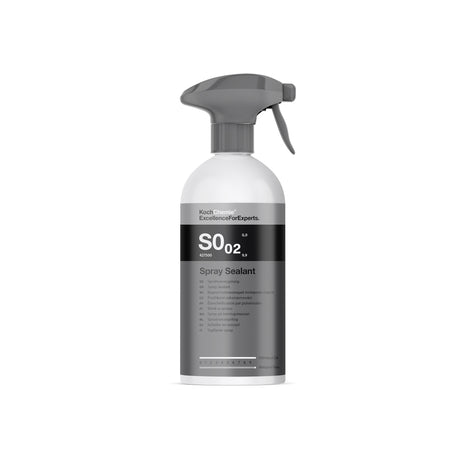
Koch-Chemie
Spray Sealant "S0.02" Spray Sealant
Spray sealant for glossy paintwork and perfect protection

SONAX
XTREME Ceramic Spray Sealant Spray-On Sealant
Ceramic Spray Sealant — 4 Months Protection, Si-Carbon


Meguiars
Ultimate Quik Wax Spray Wax Sealant
Spray wax — real wax protection in 5 minutes after every wash
Dr. Wack "A1"
A1 "ALL in ONE" Care & Protect Spray Sealant
Multi-surface spray sealant for all exterior surfaces – no wait time
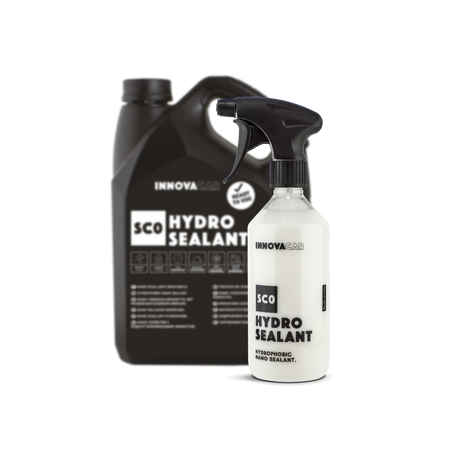
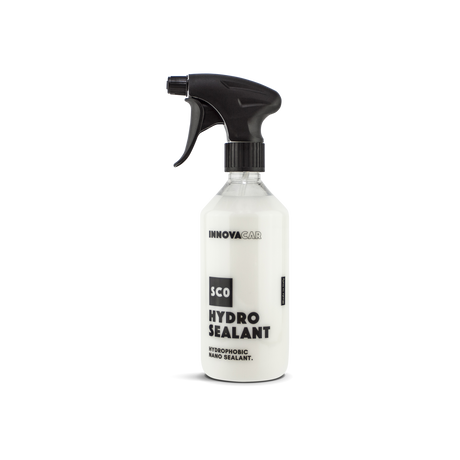


INNOVACAR
"SC0" Hydro Sealant Spray Sealant
Spray Sealant for Protection & Shine in one Step


GYEON
Q²M Cure (REDEFINED) Ceramic Spray Sealant
Ceramic Spray Sealant – Coating refreshed every 2 months


Meguiars
Hybrid Ceramic Spray Wax Spray Sealant
Spray on, rinse off, done — SiO2 ceramic protection in 2 minutes


CarPro
CarPro "Reload" 2.0 Spray-Sealant Silicon Spray Sealant
Outstanding shine and protection for your vehicle
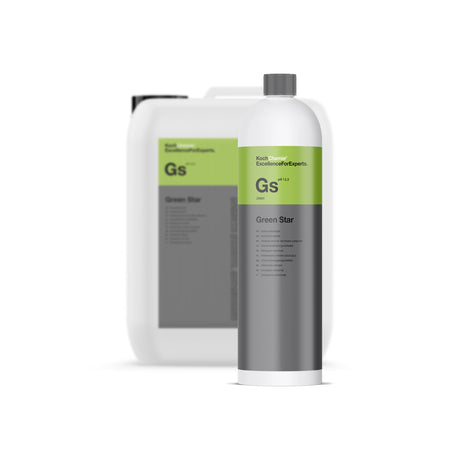
Koch-Chemie
PerfectFinish Sealant "Pfs" spray sealant for a high-gloss surface
Polymer spray sealant from Koch-Chemie for paint and ceramic


GYEON
Q²M Cure Matte (REDEFINED) Ceramic Spray Sealant for Matte Surfaces
Matte Lacquer Sealing – SiO₂ Protection Without Changing the Sheen


ZviZZer
Graphene Spray Coat Spray Sealant
Graphene spray sealant for paint with beading and deep gloss


CarPro
Car Care Starter Kit with Carrying Case and Premium Care Products
What is a spray sealant for your car? Liquid paint protection you spray on, spread and wipe off. Depending on the product, protection lasts from a few weeks to several months, much longer than a quick detailer and shorter than a ceramic coating. At Detailing1 you'll find rinse-off sealants and ceramic sprays.
Spray sealant is liquid paint protection made from polymers, silicon dioxide or wax, ready to use in a spray bottle and with no long curing time. You spray it onto clean paint, spread it with a microfibre cloth and buff off the excess. What's left is a hydrophobic film on the clear coat that makes water bead up and dirt struggle to stick. A whole car is protected in about ten minutes.
Detailing1's tip from the shop: The most common mistake doesn't cost you a minute of work, but it wrecks the result: too much product at once. Two or three sprays are enough for half a bonnet, anything more won't wipe off cleanly and dries into a smeary film. What you then see under raking light are high spots, patches of excess sealant with a dull shimmer. Work in small sections, use two towels, one to spread and a dry one to buff off, and stay out of direct sun. If a haze still remains, spray again and wipe off straight away, don't rub it dry.
A spray sealant delivers protection for weeks to months, putting it squarely between the short gloss refresh of a quick detailer and the season-long coating from a ceramic kit.
A Quick Detailer is built for instant results. It picks up dust and fingerprints, lays a thin slick film on the paint and deepens the colour for a few days. Protection is a side effect, not the goal. After the next wash with shampoo, there's practically nothing left of the layer.
At the other end is the ceramic coating. It needs decontaminated and usually polished paint, a panel wipe to degrease, careful application section by section and then hours without water contact. Depending on the coating, manufacturers quote durability of up to five years when maintained as specified. The effort is real, and it's the reason many cars never get one.
Spray sealant fills exactly that gap. No mandatory polishing step, no curing time under cover, no worrying about rain the next morning. Depending on the chemistry you get four weeks to six months, and you simply repeat it on your next wash day. Protection that fits your routine beats protection waiting for the perfect date.
Compared with the classic products under wax sealant, it differs less in durability than in how you work. A hard wax from a tin goes on with an applicator pad, flashes off and gets buffed out, a good forty minutes per car. The spray version takes two of those three steps off your hands and lands at similar durability.
We often see customers underestimate this category because it's quick. Quick doesn't mean weak here, it means dosed differently: thinner layer, repeated more often. Over a year, the paint is often in better shape than with a coating applied once and never maintained.
Three active-ingredient groups share this category, and they differ in durability, look and how forgiving they are of application mistakes.
Polymer sealants work with synthetic chains that crosslink into a continuous film as they dry. Picture a very fine plastic mesh laid over the clear coat, closing its pores. In practice: an even look with no colour shift, easy to apply and rarely prone to smearing.
Ceramic sprays contain silicon dioxide, the same base material glass is made from, in a finely dispersed, reactive form. As they flash off, these particles bond with each other and with the paint surface to form a hard, very slick layer. How you notice: the paint feels squeaky-slick after buffing and water has noticeably less to grab onto. The SONAX XTREME Ceramic Spray-Versiegelung belongs to this group.
Wax hybrids mix carnauba or synthetic waxes with polymers. They bring the warm depth many people miss with ceramic, especially on dark colours. The Meguiars Ultimate Quik Wax and the Meguiars Hybrid Ceramic Spray Wax stand for this route, with the second combining a wax look with a ceramic share.
What all three have in common is the contact angle. On untreated clear coat, water sits flat at around seventy degrees. A fresh sealant pushes that angle above a hundred degrees, the water pulls into beads and rolls off sideways in the airflow while driving. For you that means fewer water spots after a shower and much shorter drying time.
With durability claims, the manufacturer's specific conditions are what count. Parking spot, mileage, washing and care can all affect how it holds up; a fixed percentage deduction isn't reliable without a product-specific test.
The category splits into two application routes, and the difference decides time spent, how precisely you can dose and the durability you can reach.
Rinse-off sealant goes straight onto the still-wet paint after rinsing. You spray it onto the dripping surface, rinse briefly and dry. The water film spreads the product for you. The GYEON Q²M WetCoat and the Koch-Chemie WetGloss „Wg" work this way and cost you barely two extra minutes per wash.
Concentrates take the same route with less product. The Koch-Chemie Protector-Wax „Pw" Preservation Wax is mixed at a high dilution and builds another thin layer with every wash. It's our best seller in this category, and the reason is simple: once it's part of your routine, you use it every wash.
The Koch-Chemie Hydro Foam Sealant „S0.03" Wet-Coat Sealant Concentrate goes through the foam sprayer. The foam covers the entire car, including spots you'd never reach with a towel, such as wheel arches and sill edges. For fleets and anyone who'd rather not climb around, it's the fastest route to even protection.
Dry application is the more precise one. You dose per section, spread with the towel and check the result straight away under raking light. Because no water dilutes it, more active ingredient stays on the surface and durability is correspondingly longer. Ceramic sprays like the GYEON Q²M Cure (REDEFINED) work on dry paint only.
In between sits the drying aid. The Koch-Chemie Quick Dry & Shine „Qds" Trocknungshilfe is sprayed onto the wet surface and pulled off with the drying towel. The towel glides more easily, no water marks are left behind, and a thin protective layer ends up on the paint along the way. It doesn't add an extra step.
The routine is short, and three things decide the result: a truly clean surface, sparing dosing and two separate towels.
The surface comes first. A spray sealant locks in whatever lies beneath it, and that includes rail dust, tar spots and tree sap. Whatever you haven't removed beforehand gets sealed in too. The right steps are under paint cleaning, and when in doubt, the hand test with a thin plastic bag over your fingers does the job.
Go light on the product. Two or three sprays per section of about half a square metre, spread with a folded microfibre towel in overlapping passes, then buffed off with a second, dry towel. Rule of thumb: if you feel drag when buffing, it was too much product or you waited too long.
Temperature and location are the second dial. The paint should be cool to the touch and in the shade. On a sun-baked bonnet the product dries before you've spread it and leaves exactly the dull patches that are a pain to remove afterwards. Early morning or evening makes for a much more relaxed job.
The right order saves rework. Roof, bonnet and boot lid first, then the sides, lower sections last. Skip rubber seals, plastic trim and glass, as some formulas leave marks there. If some does land there, wipe it off straight away with the dry towel while it's still damp.
Allow more time than promised the first time. For an estate you'll initially need closer to twenty minutes than ten, because you're still getting a feel for dosing. By the fourth round the rhythm of spray, spread and buff is dialled in, and then the ten-minute figure holds for you too.
On an existing coating, a suitable spray sealant serves as an extra maintenance layer, and several products in the range are designed for exactly that.
The reason lies in the surface. A ceramic coating is hard and slick, but in everyday use it fills up with road film, brake dust and limescale. The chemistry underneath is intact, the microstructure on the surface no longer is. Water sits flatter, and it looks as if the coating is finished.
A topper restores exactly that surface. The GYEON Q²M Cure (REDEFINED) is built as a maintenance product for existing ceramic layers and brings the beading back to the level of the first few weeks with just a few minutes of work. You see the difference in droplet size at the next rain, not months later.
Paint protection film has its own needs. Its surface is softer than clear coat and moves with heat, which is why aggressive cleaners and hard coatings have no business there. The GYEON Q²M „PPF" Maintain (REDEFINED) is tuned for film and leaves the layer's self-healing properties alone.
Matt surfaces can't take a gloss enhancer. Any sealant designed to add depth fills in the microstructure and turns matt into blotchy gloss, which can't be undone. For matt paint, matt wraps and satin elements, the GYEON Q²M Cure Matte (REDEFINED) is the right choice.
There's a limit, too: a topper doesn't replace a base layer. Once the ceramic coating has chemically broken down after two years, even the best spray won't bring it back, and it's time for a fresh build-up. We get a lot of questions about this, and the honest answer is usually: spraying helps as long as there's still something there to refresh.
The decision comes down to three questions: how often do you wash, is there already a coating on the paint, and are you after protection or mainly looks.
If you wash regularly yourself and want protection thrown in along the way, a rinse-off sealant is your best bet. The Koch-Chemie Protector-Wax „Pw" Preservation Wax builds another thin layer with every wash, and the Koch-Chemie Hydro Foam Sealant „S0.03" Wet-Coat Sealant Concentrate does the same via the foam sprayer for anyone who wants to cover the wheel arches too.
If you wash less often and want as much peace as possible per application, take the dry route. The SONAX XTREME Ceramic Spray-Versiegelung delivers the longest durability in this selection and is the pragmatic stand-in for anyone who really wants a ceramic coating but can't fit in the effort.
If your car already wears a coating or paint protection film, stick with the matching topper. GYEON Q²M Cure (REDEFINED) for coated paint, GYEON Q²M „PPF" Maintain (REDEFINED) for film, GYEON Q²M Cure Matte (REDEFINED) for anything matt. These three aren't alternatives to each other, they belong to different surfaces.
If depth and colour on a dark car are what you're really after, a wax hybrid is the more honest recommendation. The Meguiars Ultimate Quik Wax lays down the warm glow that ceramic sprays deliberately don't. If you want to push the look further, you'll find the classic buff-off versions under wax sealant.
And if you're after the bigger picture: every level of protection, from spray to multi-year coating, is under Lacquer sealing, and the whole area around protection and preserving value under Sealing & care. Spray sealant is the entry point with the lowest hurdle there, and it's the only level that fits into an ordinary Saturday morning.
Too much choice in Spray sealants? Get help picking:
Daniel von Detailing1 |

Daniel von Detailing1 |

Daniel von Detailing1 |

Daniel von Detailing1 |

Daniel von Detailing1 |

Daniel von Detailing1 |

Jasper von Detailing1 |

Daniel von Detailing1 |

Daniel von Detailing1 |

Daniel von Detailing1 |

Jasper von Detailing1 |

Jasper von Detailing1 |