

Clean wiper rubber wipes streak-free, especially in summer
You clean the windscreen until it gleams, pull away, and on the first squirt the wiper still drags streaks right across your line of sight. The reflex is instant: buy new wiper blades. But in most cases the old ones aren't worn out at all, just dirty and gummed up, and that's a two-minute fix.
Cleaning your wiper blades means clearing the rubber lip of bug film, limescale and polish residue instead of swapping the blade too soon. A hardened rubber needs replacing; a smeared one just needs a wipe.
Summer heat and bugs are hardest on the rubber lip
In summer, your wiper rubber ages faster than the rest of the year, which is exactly why you need to clean your wiper blades more often, because heat, UV light and bug residue all work on the thin lip at once. That's why the streaks pile up from June onward, not because the blade has suddenly failed.
In full sun, the black rubber sits on glass that can climb past 60°C at the height of summer, drying out from the surface down. A wiper blade is designed for roughly 150,000 to over 750,000 wipe cycles, about a year of service, but the natural rubber and the fine graphite coating that give it its glide slowly lose their suppleness to UV light and ozone. The lip goes hard, loses its fine edge and starts to chatter instead of pulling clean.
Then there's bug season. Splattered midges and flies leave protein residue that literally bakes onto glass and rubber in the heat. That residue settles as a sticky film on the wiping edge and lifts it off the glass in places, so water runs underneath instead of being pushed away.
A third factor is the silicone film from spray waxes, rain repellents and polish dust that builds up on the glass over weeks. It's the same film that makes the inside of the glass smear in summer, just on the outside. On a surface like that, even a perfectly good lip can't wipe clean.
In northern Germany there's also the pollen, which drags on here into July. Grass and mugwort pollen team up with the bug film to lay a sticky layer on the edge that no longer sheds water. If you cover a lot of country roads, you'll pick up more grime in a single summer evening than across the whole winter, which is exactly why wiper care makes the biggest difference right now.
A gummed-up rubber smears instead of wiping streak-free
Streaks, chatter and a squeaking noise are almost always down to dirt, not wear, as long as the lip shows no cracks or tears yet. Tell the two apart and you save yourself the cost of a new set.
Run a finger along the rubber edge. If it feels smooth and slightly springy and leaves a dark, greasy streak on your fingertip, it's just dirty and can be saved. If the rubber crumbles, feels rough, cracked or torn at the corners, only a new one will do, and swap it before the hard edge scratches the glass. As a rule of thumb: if four or five fixed streaks stay in your outer field of view after a wipe, the lip is worn and no amount of cleaning will bring it back.
The smeared film is sneaky because it scatters oncoming light. With a low evening sun or headlights coming the other way, that thin veil turns into a milky sheet that takes your sight for a moment. That's not a cosmetic issue but a safety one, especially on country roads after a hot day, when the low sun is already in your eyes and every bit of extra glare costs you reaction time.
The glass itself matters too. If your freshly cleaned wiper smears again after a few kilometres, the grime is often on the glass, not the rubber. Then clean both in one go, otherwise the glass hands its film straight back to the clean lip.
A question customers keep asking us is whether the wiper scratches the glass. That only happens with a lip that's already hardened or torn, with grains of sand caught in it, or when you wipe over bone-dry glass. A supple, clean rubber doesn't scratch, and that's exactly why regular cleaning is also the best protection for the glass itself.

Lift the wiper, draw off the rubber lip, work in one direction
To clean your wiper blades, lift the wiper arm off the glass, spray a cleaner onto a cloth and draw the rubber lip through it several times in the same direction until nothing more comes off. The whole job takes under two minutes per blade.
Fold the arm up carefully until it locks, and lay a cloth underneath in case it snaps back, because an arm dropping onto the glass unchecked can damage it. Dampen a clean microfibre cloth, ideally a smooth glass towel, and run it along the rubber lip with light pressure from one end to the other. Always in one direction, never back and forth, so you don't spread the loosened dirt around again.
Hold the wiper arm firm with one hand and draw the lip with the other, so you stay in control of the spring-loaded arm. A smooth glass towel beats a loosely looped wash mitt here by a mile, because it doesn't snag on the fine edge and actually picks up the residue instead of just smearing it around.
After two or three passes you'll see the dark residue on the cloth that was causing the streaks. Repeat until the cloth stays clean. Finish with one more pass using the clean, damp side of the cloth so no cleaner residue is left on the edge.
Remember both sides of the car and the rear wiper if you have one, because that's the one most often forgotten and then the only one left smearing. On a car like a BMW M2 with a single long front wiper, the whole job takes under five minutes; on a car with two wipers, correspondingly longer. It's worth the effort, because you get weeks of clear, calm visibility out of it.
Clean the windscreen itself in the same session, because a clean wiper on a filmed-up screen won't last a week. A glass cleaner dissolves the greasy film and lets the surface dry streak-free, so the freshly cleaned lip runs on bare glass again.
Mzr degreases the lip, Glas Star clears the glass
To clean your wiper blades you need just two cleaners and a cloth: an alkaline all-purpose cleaner for the rubber lip, a glass cleaner for the screen and a lint-free glass towel. Both are concentrates, so they go a long way across a whole season.
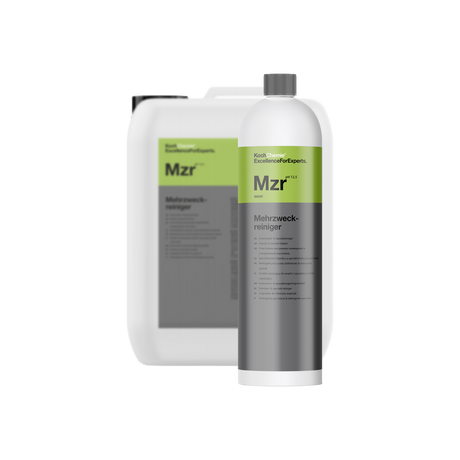
The sticky bug and silicone film on the lip comes off most reliably with Koch-Chemie Mzr, an alkaline heavy-duty cleaner with a pH of 12.5. Diluted to 1:20 and put on the cloth, it breaks up the greasy layer without attacking the supple lip. You don't need much for the wiper, a single squirt on the cloth is enough per blade.
One litre of concentrate makes around 21 litres of working solution, enough for countless wiper cleans and half your interior on top. Over 40 verified reviews on Trusted Shops with an average of 4.97 out of 5 show the cleaner is valued for exactly these stubborn jobs. Its downside is stated honestly: the alkaline cleaner has no business on sensitive soft-touch plastics or matte piano-black trim, but on the rubber lip and glass it's spot on.
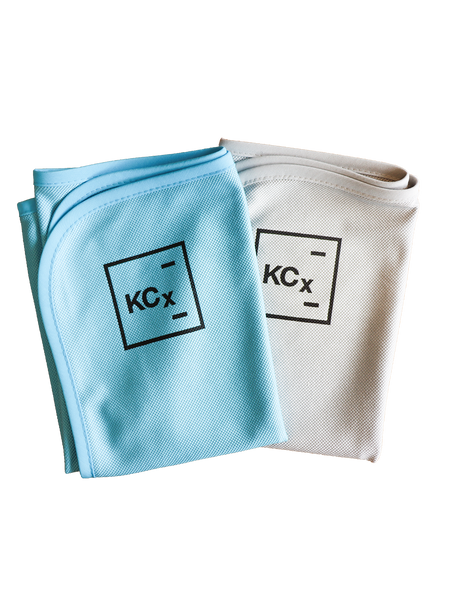
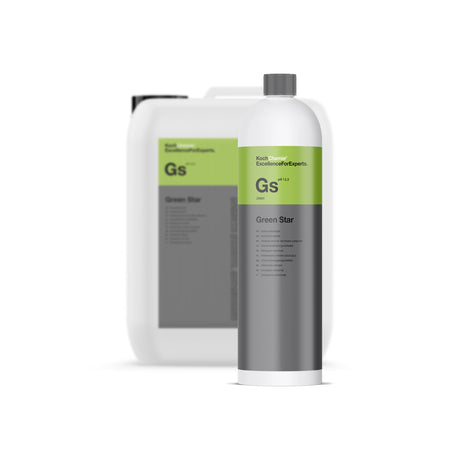
The glass then gets Glas Star, a glass cleaner concentrate that dissolves grease and film residue and dries without leaving anything behind. Together with the Pro Glass Towel, a tightly woven glass towel, no veil is left for the wiper to grab onto again. If you'd rather work with a single product, the milder Green Star will handle the lip too, but you'll need to let it dwell a bit longer on heavily baked-on film. You'll find all the right products bundled in our glass cleaner selection.

WD40 and trimmed rubbers make it worse
The most popular wiper trick online, wiping the lip down with WD40, works briefly and then comes back to bite you, because the oil product leaves a film that migrates onto the glass and draws fresh streaks there. The honest advice: keep the penetrating oil away from your wiper.
WD40 really does make the rubber supple at first, but it's not a care product, it's a penetrating oil. The oil film left behind spreads across the whole screen with the next rain and creates exactly the greasy layer you were trying to get rid of. It's the same effect we described with the oil film on the glass, only self-inflicted.
Harsh washing-up liquid or an aggressive household cleaner are the wrong reach too. They often contain additives and fragrance oils that leave a film of their own, and some attack the rubber compound over time. The lip wants a cleaner that dries residue-free, not whatever happens to be under the sink.
Trimming a frayed rubber edge with a blade is just as useless. You'll never get that fine precision edge that pulls the water film off cleanly back by hand, and the result chatters all the more. If the rubber is done, just replace the rubber insert rather than the whole blade, it saves material and takes five minutes on most wipers.
The third classic: running the wiper on a dry or iced-up screen. Dry friction sands the edge down, and a frozen lip tears the moment it starts. In summer it's mainly the first one that gets you, so only wipe once there's water on the screen, never over bone-dry glass.
Constantly wiping over baked-on bugs does more harm than good too. The hard chitin residue acts like fine sandpaper on the rubber edge. Better to soak the front briefly after a long summer drive and take the grime off with a cloth, rather than letting the wiper work against it dry.
Two minutes every four weeks saves you the new set
Wipe the wiper rubbers down every three to four weeks and you extend their life noticeably, often getting a whole extra season out of a set instead of the usual six to twelve months. Those two minutes during a wash are the cheapest visibility upgrade there is.
Just build wiper care into your normal car wash. Once the screen is wet anyway and the cleaners are already out, the lip only costs you that one extra pass with the cloth. Fresh washer fluid with a good cleaning additive matters just as much, because hard tap water on its own leaves rings that build the film right back up.
The best time to start this routine is right now, at the start of bug season. Leave it until autumn and the grime has been baking on for months, so you'll have to work much harder. A wiper kept clean from the start often makes it through the whole summer without a single swap and holds its fine edge right into winter.
And when a swap really is due because the edge has cracked, you'll find the right care programme for the fresh screen in our windows and glass selection. A new rubber on a clean, degreased screen lasts longest; anything else is only half the job again.

Detailing1 insight: At our showroom in Nordhorn, almost every week someone turns up with supposedly dead wipers, and in nine out of ten cases it's the film, not the rubber. Our fastest test happens right at the car: a splash of Mzr at 1:20 on the glass towel, draw the lip twice, and if the towel goes dark, the wiper can be saved. On one test car whose owner already had new blades in the boot, two minutes of streak-free glass made the 40-euro purchase pointless. The one mistake we really do see is impatience: wipe over baked-on bug film just once instead of making two or three passes and you give up too soon.
No time for the whole post? Get it summarized:
Add Detailing1 as a preferred source on Google