




Car drying towel: which towel dries your car without water spots
Daniel von Detailing1 |


Koch-Chemie × COLOURLOCK
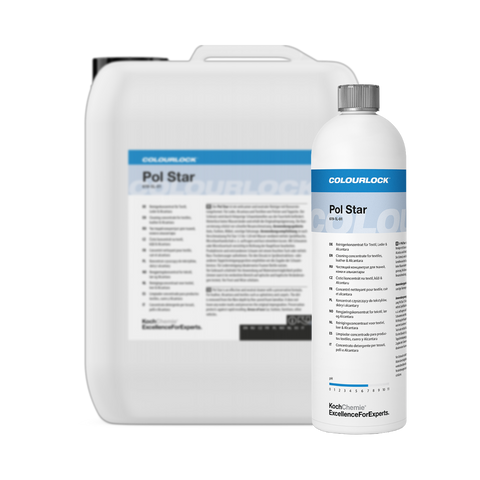
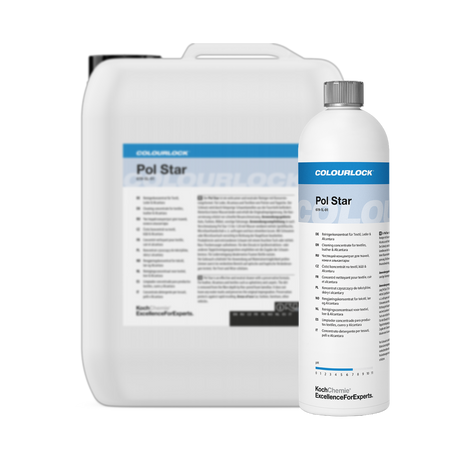
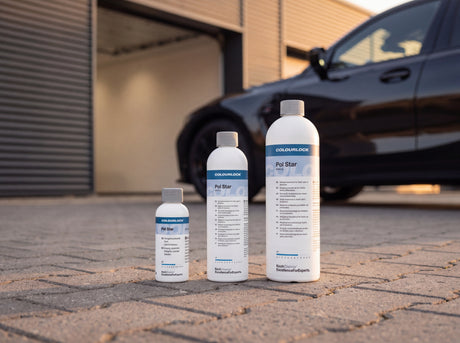
COLOURLOCK "Pol Star" cleaner concentrate for fabric, leather & Alcantara
pH-neutrales Reinigerkonzentrat für Textil, Alcantara und Glattleder
Koch-Chemie
Interior Brush "Yellow" interior brush medium-hard
Koch-Chemie
Interior Brush "Red" hard interior detailing brush
Koch-Chemie × COLOURLOCK
COLOURLOCK "Fresh Up" Odour Neutraliser with Fresh Scent
Fresh and effective odor neutralizer for interiors and leather


Koch-Chemie × THE FINISHER
THE FINISHER "DisplayExpert" Screen Cleaner
Special cleaner for optimal display cleaning


Koch-Chemie × THE FINISHER
THE FINISHER "InsideUp" Interior Cleaner
Gentle interior cleaner for hard plastics
Koch-Chemie × COLOURLOCK
COLOURLOCK "Leather Cleaner" (Mild) — cleaner for normally soiled pigmented smooth leather
Gentle daily leather cleaning and care

GYEON
Q²M LeatherBrush Leather Brush


SONAX
PROFILINE LeatherCleaner (foam cleaner)
LeatherCleaner — Professional Leather Cleaner (Foam Cleaner)
Koch-Chemie × COLOURLOCK
COLOURLOCK "Leather Cleaner" (Strong) cleaner for heavily soiled, surface-pigmented smooth leather
Powerful intensive cleaning for heavily soiled leather
Koch-Chemie × COLOURLOCK
COLOURLOCK "Aniline & Nubuck Cleaner" Gentle cleaner for all open-pore smooth leathers and nubuck
Gentle cleaning and safe deep conditioning for aniline and nubuck
What does interior car care actually involve? Three material worlds, each with its own chemistry: hard plastic surfaces, fabric seats and carpets, and leather. Each one needs different active ingredients — there's no single product that does all three. At Detailing1 you'll find the gear for it from SONAX, Koch-Chemie, COLOURLOCK, Meguiar's, Dr. Wack and GYEON.
Interior care in a car splits by material, not by brand. Hard surfaces like the dashboard and door cards need surfactants and UV protection, fabric seat covers need cleaners that pull deep into the fibre and back out again, leather needs re-fatting and pigment protection. Try to cover all three worlds with one single product and you'll get a poor result in at least two spots. This overview sorts the range by material and points you into the right sub-category.
Day-to-day from Detailing1: We often get questions about stains that come back after cleaning. In almost every case the cause is the same: the cleaner went on, got worked in, and the dissolved gunk was never lifted back out. The dirt then sits as a ring in the fibre or in the plastic grain and shows up again with the next change in humidity. So always work with two cloths — one lays the product down, the second takes it off dry. Same goes for seat covers with a clean terry cloth that you press down firmly. Whatever you don't pull out, you'll see again in two weeks.
The interior isn't one material type, it's a collection of at least three. That's why there are more product categories here than for a full exterior wash.
Hard plastics don't mind moisture and take alkaline cleaners fine. Their weak spot is the grain — the fine texture that gives the dashboard its matte look. Dust settles into those recesses, where a flat cloth can't reach. That's why good interior cleaners work with surfactants, molecules that lift the dirt chemically instead of scrubbing it out mechanically. For you that means no pressure needed, and the grain stays crisp instead of being buffed shiny.
Textiles behave the opposite way. They soak up liquid and release it slowly. A cleaner laid on too wet carries the dissolved dirt down into the foam, where it wicks back up as it dries and shows as a ring. That's why textile cleaners work with foam instead of liquid — foam stays on the surface.
Leather is the touchiest case. Automotive leather is almost always pigmented, so it carries a thin coloured top layer. That finish is what you see and touch — the actual leather sits underneath. Aggressive cleaners bite into the finish, and the result is colour coming off on your cloth and a dull patch you can't bring back. That's why leather cleaners are mild and pH-adjusted, and leather care brings re-fatting so the finish stays supple and doesn't crack.
The order in the interior follows gravity, and it follows it strictly. Everything you loosen falls downward.
First everything loose comes out. Floor mats, rubbish, whatever's in the door pockets. Then you vacuum, before any cleaner comes into play. Damp dust won't vacuum any more — it turns to sludge in the seat seams.
Next come the hard surfaces from the top down: headliner only if needed and very gently, then A-pillars, dashboard, centre console, door cards. The headliner is the trickiest spot in the whole car, because it's glued and comes away from its backing with too much moisture. There you work almost dry, or not at all.
Fabric seats and carpet come after that, because cleaning the hard surfaces inevitably drips something down. Leather gets done last, usually on a separate day, because leather care needs time to soak in and nobody should sit on the seat in the meantime.
Glass right at the end. It shows every mistake from the earlier steps, and while you're cleaning the dash some overspray always lands on the inside of the windscreen. Do the glass first and you'll do it twice.
On tools, little is enough — it just has to stay separated. Four microfibre cloths cover a whole interior: one for cleaner, one for drying, one for care products and one for glass. The glass cloth stays strictly separate, because any trace of care product in it shows up straight away as a smear on the window. Add a soft brush for vent slats and seams that drives the dust out instead of pushing it deeper. Go through the whole interior with a single cloth and all you do in the end is move it around.
Our interior range is organised along the three material branches, and each has its own focus.
The Interior care branch bundles cleaning and preserving the hard surfaces. There you'll find both Interior cleaners and Plastic care, because the two steps belong together in the workflow. The TUGA Chemie Kunststoff-Teufel® Innenraumreiniger and the THE FINISHER „InsideUp" Innenraumreiniger are the two that most often get bought here alongside a care product.
The Textiles & Upholstery branch covers seat covers, carpet and headliner, plus textile sealants that keep liquid sitting on the fibre instead of letting it soak in. For family cars with child seats this is the branch that matters most in the whole interior.
The Leather branch is the biggest in the range, because it brings together two manufacturer worlds: the leather care from Koch-Chemie with the Leather Star „Ls" Lederpflege and the COLOURLOCK sets, which come out of leather repair and are specialised to match. If you only want to maintain, a leather care product is the right call. If you want to save a worn seat bolster, you need a set. The driver's seat bolster is nearly always the first spot to give up, because your trousers scrape over it every time you get in.
The price range in the interior line is wider than in any other category, running from under three euros for a single microfibre cloth up into four figures for professional seat-cleaning machines. For the private user the sensible range sits at the lower end: three products and four cloths cover a whole interior. The expensive items in the range are aimed at valeters who run cars through daily and for whom the time saved pays off.
Cutting across all three branches is the odour area. Ten products in the range address it, from air fresheners to odour removers that bind molecules instead of masking them. Honestly, none of them fixes a real source — with damp insulation or a fouled A/C system, only dealing with the cause helps.
Three surfaces in a modern interior are sensitive, and all three have become more common in recent years.
Displays and instrument panels carry anti-reflective coatings. These are wafer-thin layers that cancel reflections through interference. Alcohol-based or alkaline cleaners bite into them, showing up as a milky haze you can't polish out. The THE FINISHER „DisplayExpert" Displayreiniger is made for exactly that.
Piano-lacquer trims are high-gloss plastic and behave like car paint: they show every micro-scratch. The most common mistake is wiping over dry dust. Dust off first with a soft brush, then work with a very soft microfibre cloth.
Alcantara and microfibre covers on the steering wheel and seat bolsters need their own treatment. They mat down if you rub them wet — the raised fibres lie flat and then look greasy and shiny. Here you work with little moisture and brush the fibre back up afterwards.
For all three the same holds: an all-purpose cleaner at full strength is the most common cause of damage that no amount of re-polishing fixes. The SONAX PROFILINE SensitiveSurface Detailer Innenraumreiniger covers exactly this in-between zone.
The fourth sensitive area isn't a surface but a system: the air conditioning. Water condenses on the evaporator, and micro-organisms settle on the damp surface — that's the source of the musty smell that comes out of the vents when you set off. Surface cleaners don't reach the evaporator; for that you need a product introduced through the intake path. One chemical-free trick helps as prevention: switch the A/C off around five minutes before you arrive and let the blower keep running. The evaporator then dries off before the car is parked.
How much product you need depends less on the car than on the starting condition. Three cases cover most situations.
A well-kept car that gets wiped down every few weeks needs little: an interior cleaner, a care product for the hard surfaces and two microfibre cloths. That's about 20 minutes of work, and more product won't get you a better result.
A car that's gone two years without an interior clean needs a deep clean, and that takes time. For a compact car reckon on three to four hours if the seats and carpet get done too. The first time it feels like too much, and that's normal — the repeat on a six-month rhythm then takes an hour.
A used-car purchase is the biggest job, especially with previous owners who had pets or smoked. Pet hair comes out better with rubber brushes than with any vacuum. Smoke smell sits in the headliner and the ventilation ducts and isn't sorted by surface cleaning.
If you're not sure where to start: the Interior care branch covers the surfaces you touch every day and delivers the most visible result per minute invested. Textile and leather pay off once the hard surfaces are sorted.
Your usage profile decides which of the three branches takes priority for you.
For the high-mileage driver in a company car the load is even: skin oils on the wheel, dust through the vents, worn sill plates. Here the hard-surface branch carries the main load, while textile often stays unremarkable for years. An interior detailer for the in-between round is enough.
For the family car the weight is on textile. Spilled drinks, crumbs in the seat folds, marks on the seat backs. A textile cleaner in the boot, ready to go straight away, prevents most permanent stains — the rule of thumb is that a fresh stain comes out in minutes and after a week needs a deep clean.
For the car with a dog there's an added mechanic. Pet hair hooks into the textile fibre and stands crosswise in it instead of lying loose — which is why the vacuum won't pull it out. What works is friction: a rubber glove or a rubber brush, drawn over the cover in one direction with light pressure. The hairs roll up into lines that you then vacuum off. The second point is the boot, where moisture collects under the floor mat and forms the odour source that many people go looking for in the cabin.
For the collector or seasonal car leather is front and centre, and that's because of the standing time. Leather that sits unmoved for months in a warm car loses plasticisers and goes brittle, especially on the seating surface where the finish is thinnest. Re-fatting twice a year matters more here than any cleaning.
And if your car has fabric seats and a plastic cockpit — which is true of most compact and mid-size cars — you don't need the leather branch at all. Two products from Interior care plus a textile cleaner cover your car completely.
Too much choice in Interior cleaning? Get help picking:
Daniel von Detailing1 |

Daniel von Detailing1 |

Daniel von Detailing1 |

Daniel von Detailing1 |

Daniel von Detailing1 |

Daniel von Detailing1 |

Daniel von Detailing1 |

Daniel von Detailing1 |

Daniel von Detailing1 |

Jasper von Detailing1 |

Daniel von Detailing1 |

Daniel von Detailing1 |