

Togliere le macchie di calcare dai vetri dell'auto senza graffiarli
Daniel von Detailing1 |


Pad, polish e cura auto del marchio.


ZviZZer
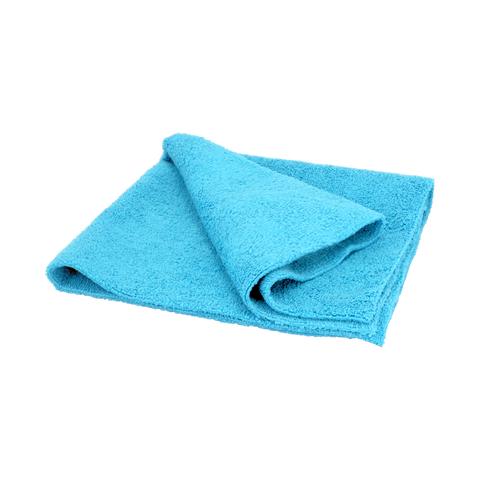
Microfiber Cloth “Edgeless” panno in microfibra (300 GSM)
Panno in microfibra 300 GSM senza bordi, sei colori, per la rimozione

ZviZZer
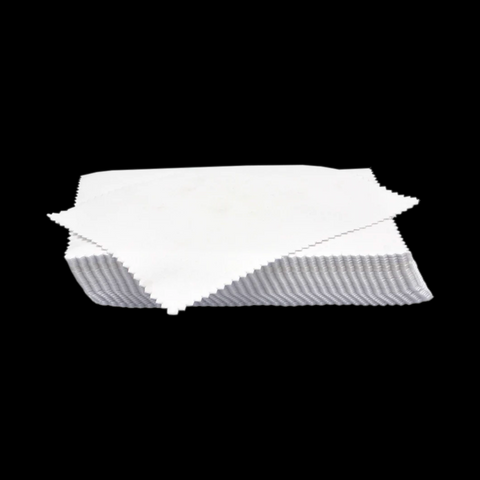
Panni applicatori bianchi Panni per applicazione
Panni applicatori in suede senza pelucchi per il coating, pack da 50

ZviZZer
Applicator-Block tampone applicatore
Applicatore in spugna a due strati per coating, cere e cura
ZviZZer accessories are the tools between the products: detailing clay for decontamination, microfiber towels for removal and buffing, and applicators for even application. Here you can see which tool belongs to which step of your detailing process.
ZviZZer accessories encompass the tools that support your detailing workflow without being products themselves. Clay decontaminates after washing, towels remove polish and wax or buff the surface, and applicators apply coatings and sealants thinly and evenly to the paint. Three tasks, three tools. We have organized them here according to the step in which you need them.
The mistake we see most often at Detailing1: a single towel for everything. The same microfiber towel removes polish, then wipes glass, and ends up on the wheel. As soon as the first brake dust particles are in the fibers, you drag them across the clear coat as fine scratch marks during the next paint pass. The solution costs nothing but discipline: assign colors to tasks and keep them strictly separate. ZviZZer provides towels in 6 colors for exactly this purpose. Blue stays on the paint, another color code goes to glass, one to the wheels, one to the interior. Anyone who sorts this out once properly saves themselves the polishing later that their own dirty rag made necessary.
After washing, paint often still feels rough, even though it looks clean. These are stubborn particles that shampoo doesn't dissolve: surface rust and industrial fallout from the air, tar splashes, tree resin residues, insect remains, water spots. You can recognize the need with the simple plastic bag test. Put your hand inside a thin plastic bag, run it over the washed surface, and the bag amplifies every imperfection that the bare finger overlooks. If it feels like fine sandpaper, it is time for the clay step.
The ZviZZer Clay Pad is a clay pad for mechanical decontamination. A hook-and-loop foam disc with a polymer cleaning layer, 160 millimeters in diameter, which you place on the backing plate of your random orbital polisher and let glide over the surface at low speed. The soft layer grips the adhering particles and picks them up. Unlike classic clay, which embeds the dirt and has to be thrown in the trash if dropped, you can rinse the pad off with water. According to the manufacturer, one pad lasts for several dozen vehicles.
Two rules are non-negotiable: always use a lubricant, never use pressure. Dry or pressed, any clay will cause marring on the paint, i.e., fine sanding marks. Plenty of shampoo water or detailer on the surface, guide the pad rather than press it, glass first, then bodywork, and do the whole thing before polishing. By the way, the clay does not correct anything. It only removes foreign bodies from the surface; swirls and holograms remain and will be dealt with in the next step with polish.
Practically speaking, you work in sections. Wet a palm-sized area thoroughly, guide the pad over it in calm passes, rinse in between, then continue. You will feel the difference: at the beginning, the pad glides roughly and with some resistance; after a few passes, it runs smoothly because the particles are gone. That is your signal that the section is finished. You can find the entire technique, the right lubricant, and when manual clay is the better choice for tight creases under Detailing Clay.
A microfiber towel is the tool you have in your hand during every step. It removes polish, buffs out quick detailers, wipes the flashed-off coating film from the paint, and is used for final drying. The ZviZZer Microfiber Cloth Edgeless, at 300 g/m², is in the mid-range: light enough to cleanly buff away residues, dense enough to absorb polish and wax. At 40 by 40 centimeters, it is a handy format that can be easily folded into quarters, giving you several fresh surfaces per towel.
The word "edgeless" is crucial. The towels are ultrasonically cut, so they have no sewn hems. It is precisely these hard edges that cause the fine scratches on sensitive clear coat that annoy everyone later. Without a hem, the short pile glides over the surface and picks up polish residues instead of rubbing them in. The 6 colors are not just decoration, but a system: you use them to separate paint, glass, wheels, and interior and prevent brake dust from the wheels from ever reaching the paint.
An honest limitation is part of it. At 300 g/m², this towel is an all-rounder, not a high-pile drying towel. You won't dry an entire car with it in one go; it lacks the absorption volume of a thick twisted-loop towel of about 1,500 g/m². It is ideal for removal, buffing, and finishing; for pure surface drying, it is better to reach for a specialized drying towel. What matters regarding GSM classes, color coding, and proper care is explained in detail under Microfiber Towels.
Coatings and sealants thrive on a thin, even film. Too much product in one spot dries into high spots, i.e., matte streaks that you then have to laboriously polish away. This is where the applicator comes in. ZviZZer has two parts for this that belong together: the applicator block and the low-absorbency applicator cloth. The block, a two-layer foam with a soft application side and a firm grip side, provides even pressure. The white suede cloth that you wrap around the block provides the lint-free contact surface.
The division of labor explains why two different towels are necessary. The suede applicator cloth is short-piled and intentionally absorbs little product so that the coating lands on the paint instead of in the cloth, and it does not release fibers into the fresh film. A normal fluffy microfiber towel would do both wrong: it would suck up the expensive coating and leave lint in the curing film. That is why you apply with suede and remove with soft microfiber. Two tasks, two towels.
In practice, it looks like this: wrap the cloth around the block, put 12 to 18 drops of coating onto the cloth surface, then apply in straight, overlapping passes using a cross-hatch pattern. Fresh cloth every 3 to 4 sections as soon as it becomes sticky. A coating that has hardened in the cloth makes it unusable because it leaves streaks, so change it instead of washing it out.
The block itself is reusable but should be separated by product type: one for coating, one for wax, otherwise you will carry over residues. We show which applicator fits which liquid or solid product and when you should use the block without a cloth under Applicators.
The process is always the same, whether it's a small car or an estate: wash, decontaminate, polish, seal, remove. Each step has its own tool, and mix-ups cost you either time or a micro-scratch. The clay comes after washing and before polishing. The microfiber towel accompanies you almost everywhere, sometimes for buffing, sometimes for removal. The applicator belongs at the end, when the paint is corrected and degreased and the protection is applied.
A typical coating day makes this tangible. You wash the car, run the clay pad and lubricant over the glass and bodywork, polish out the swirls, and degrease the surface. Then you wrap the block with a fresh suede cloth, dose the coating, and pull pass by pass in a cross-hatch pattern. After flashing off briefly, you remove the film with a soft microfiber towel. Four steps, three tool groups, and each part does exactly its job.
Not every appointment needs all the steps. During a pure maintenance wash on an already sealed car, the clay step is omitted because the paint remains smooth, and polishing is also unnecessary. What remains is the microfiber towel for buffing out the quick detailer. If, on the other hand, a fresh sealant is due, the full chain runs: clay, polish, then applicator.
Thus, the condition of the paint decides which tool you pick up, not a rigid plan. You still perform the plastic bag test at the beginning every time. It takes ten seconds and tells you whether the clay step is due or whether you can skip it this time.
We advise here consciously about the process instead of individual data sheets. Anyone who understands where the clay fits and why suede and microfiber are two different things buys the right tool and not one too many. You can find the complete ZviZZer range from polish to coatings to pads bundled under ZviZZer if you are looking for the right product for the tool.
Good accessories last a long time if you treat them correctly. We always see three care mistakes at Detailing1, and all three are avoidable. First: using new microfiber towels unwashed. Fresh from the packaging, they still carry fiber residues that end up as lint on the paint. Washing once before the first use solves this. Second: washing towels together with cotton or bath towels, causing the microfiber to pick up foreign lint. Towels belong in their own wash.
The third mistake is the most expensive: fabric softener. It leaves a film on the fibers that sticks them together and makes them water-repellent, which is how the towel loses exactly the absorbency you bought it for. Wash microfiber without fabric softener, with little detergent, at a moderate temperature. The color code also needs to be maintained: if the blue paint towel accidentally ends up in the wheel wash, the clean separation is gone.
A different logic applies to the pads. You rinse the clay pad with clear water after each use and let it dry, then it is ready for use again immediately. You wash the applicator block under running water, but do not soak it in a solvent bath; the foam cannot handle that. As soon as a coating has hardened in the block, it cannot be washed out completely; then you continue to use it as a pure wax applicator. This way, the same set accompanies you through many detailing days.
Do I strictly need a polisher for the clay pad? For the mechanical version, yes, the pad sits on the backing plate of a random orbital or orbital polisher and runs at low speed. For tight creases, edges, and detailed areas where the round pad does not lie flat, the classic manual clay remains the better choice. Over large areas, the pad is faster and more even; in detail, the hand wins.
Can I use a microfiber towel on both sides and how often should I change it? Both sides can be used, and when folding into quarters, you get several fresh surfaces out of one towel. As soon as one surface is saturated with polish or wax, you turn or fold to a clean area. For coating application, the rule is stricter: fresh suede cloth every 3 to 4 sections because a hardened film leaves streaks.
What is the difference between an applicator block and an applicator cloth, and do I need both? The block is the carrier and handle; the suede cloth is the low-absorbency, lint-free application surface. For thinly dosed coatings, you cover the block with a cloth. For large-area waxes or plastic care, the soft block side is sufficient even without a cloth. Both belong in the coating workflow and complement each other; neither replaces the other.
Which towel do I take for removing the coating? Not the suede application cloth, but a soft, fluffy microfiber towel such as the Microfiber Cloth Edgeless. Exactly the absorbency that bothers you during application is what you need now: the briefly flashed-off film is cleanly removed without leaving streaks. For this, keep a fresh towel reserved only for the coating ready, and do not use the same one you previously used to remove polish.
Troppa scelta in Accessori di ZviZZer? Fatti aiutare a scegliere:
Daniel von Detailing1 |

Daniel von Detailing1 |

Daniel von Detailing1 |

Daniel von Detailing1 |

Jasper von Detailing1 |

Daniel von Detailing1 |

Daniel von Detailing1 |

Daniel von Detailing1 |

Jasper von Detailing1 |

Jasper von Detailing1 |

Daniel von Detailing1 |

Daniel von Detailing1 |